
Not everything precise.
Only what is functionally critical.
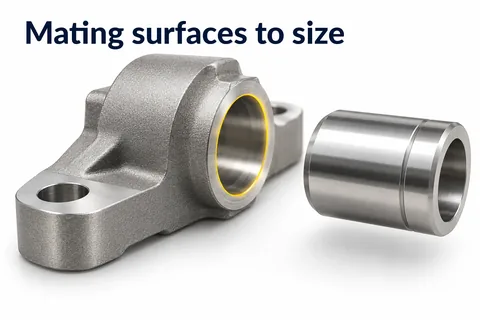
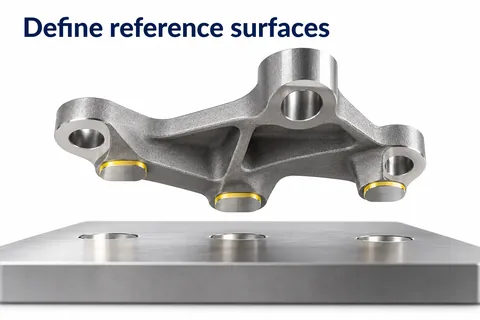
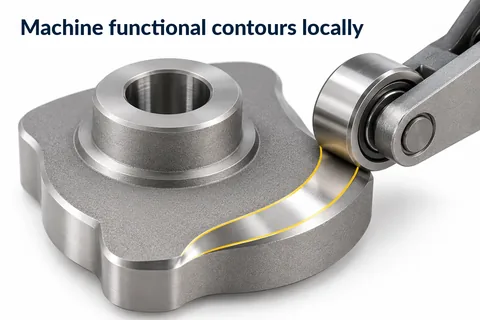
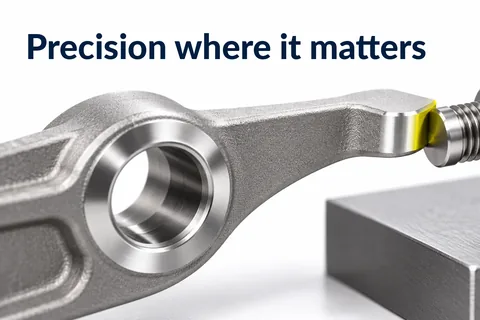
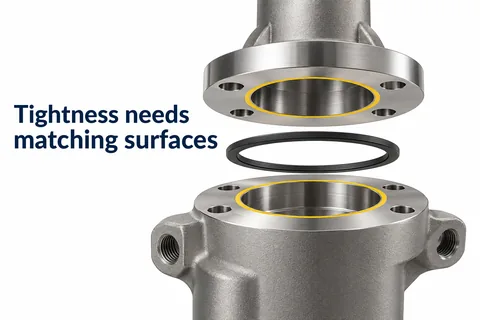
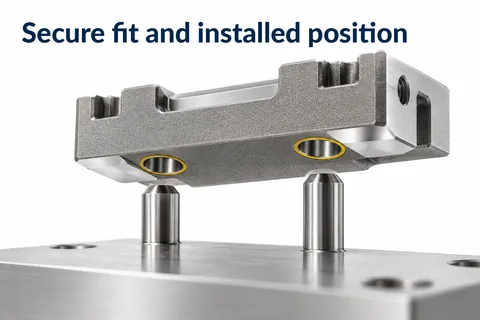
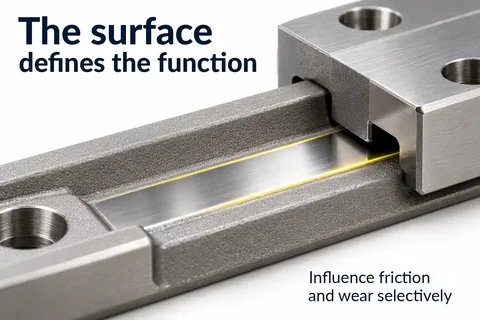
Post-processing is a normal part of the A-MIM process chain. Machining is done where sintering does not deliver the required tolerance or surface – how much that is depends on the function.
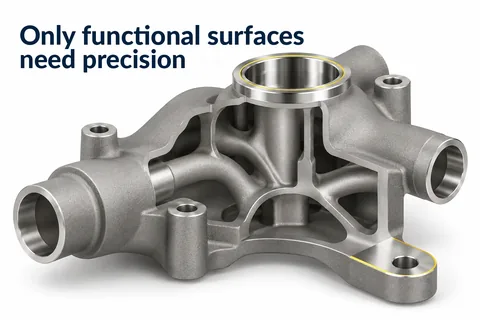
Typical critical areas
These surfaces and features often require targeted post-processing:
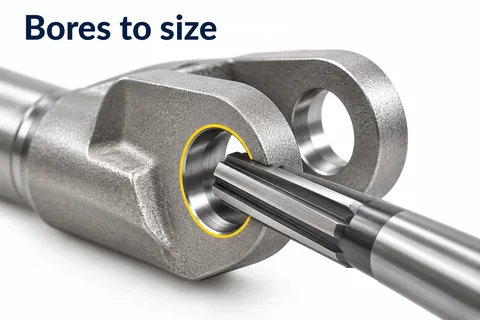
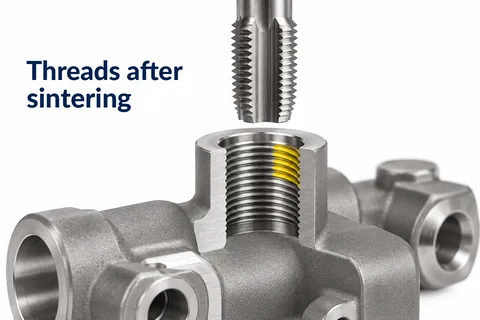
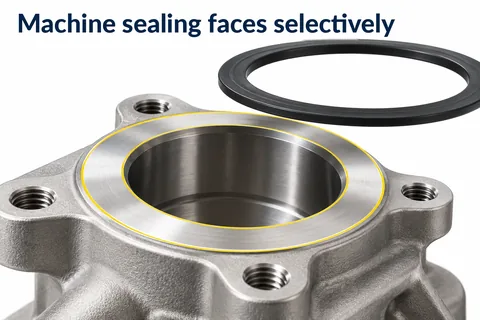
Where the blank is often sufficient
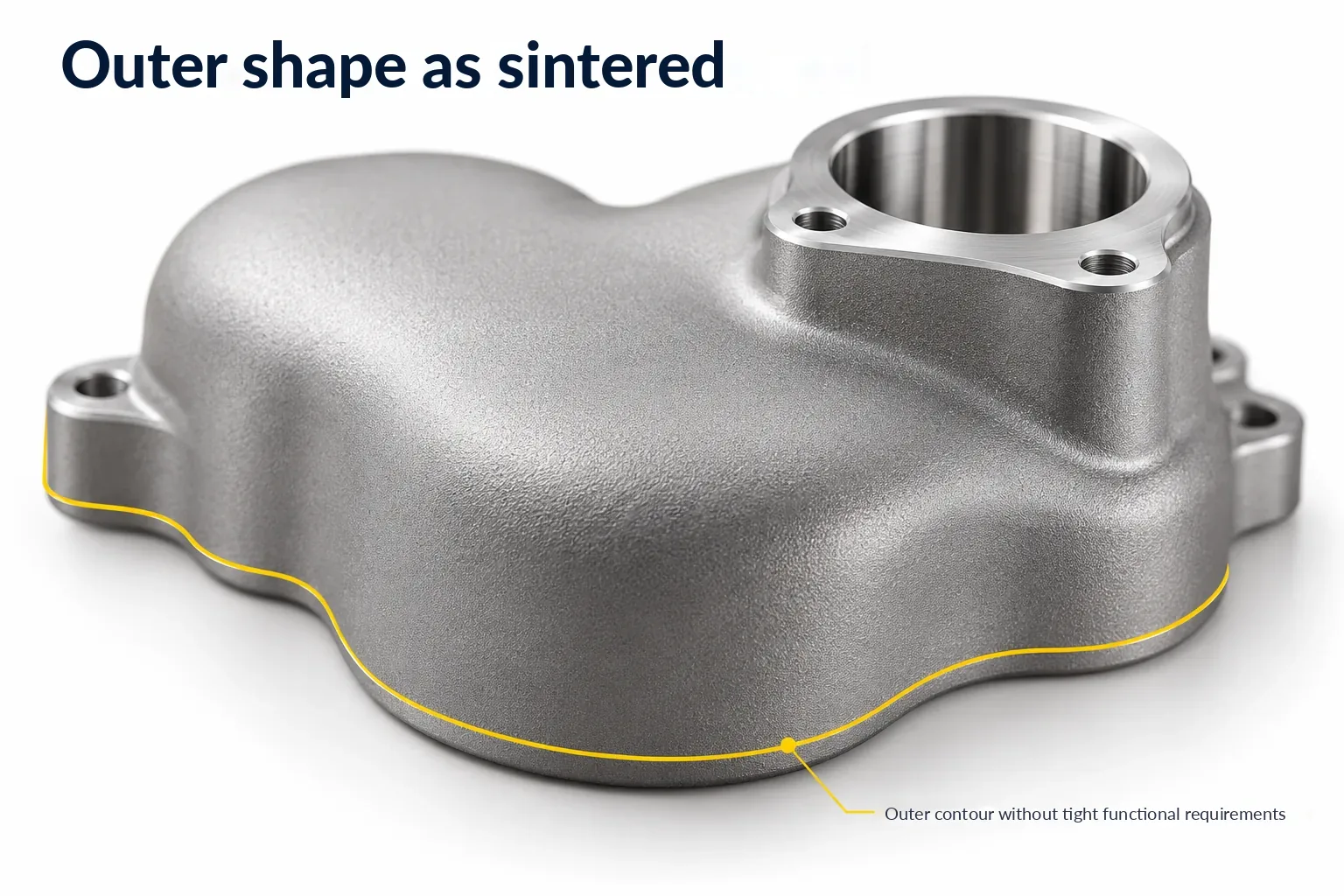
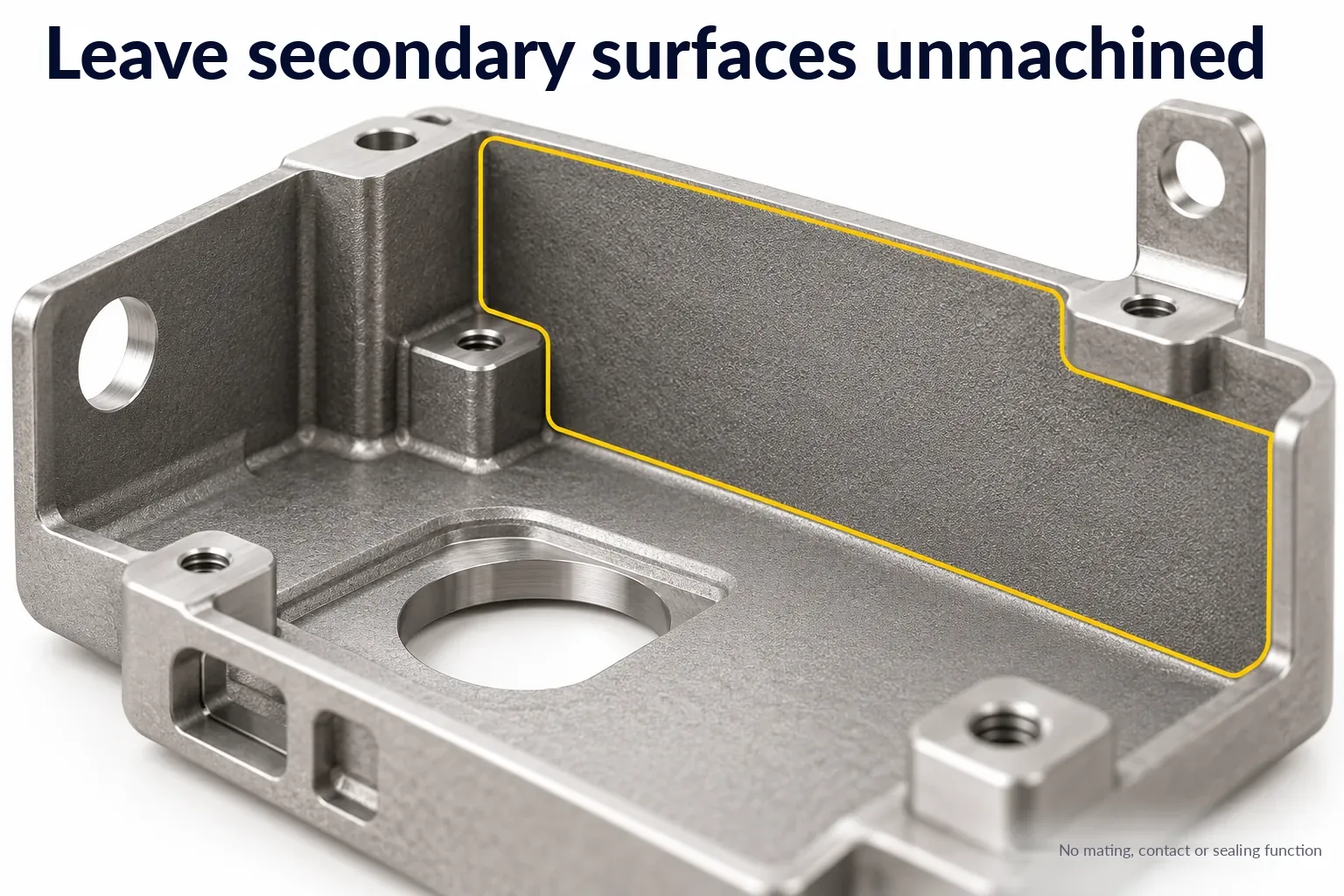
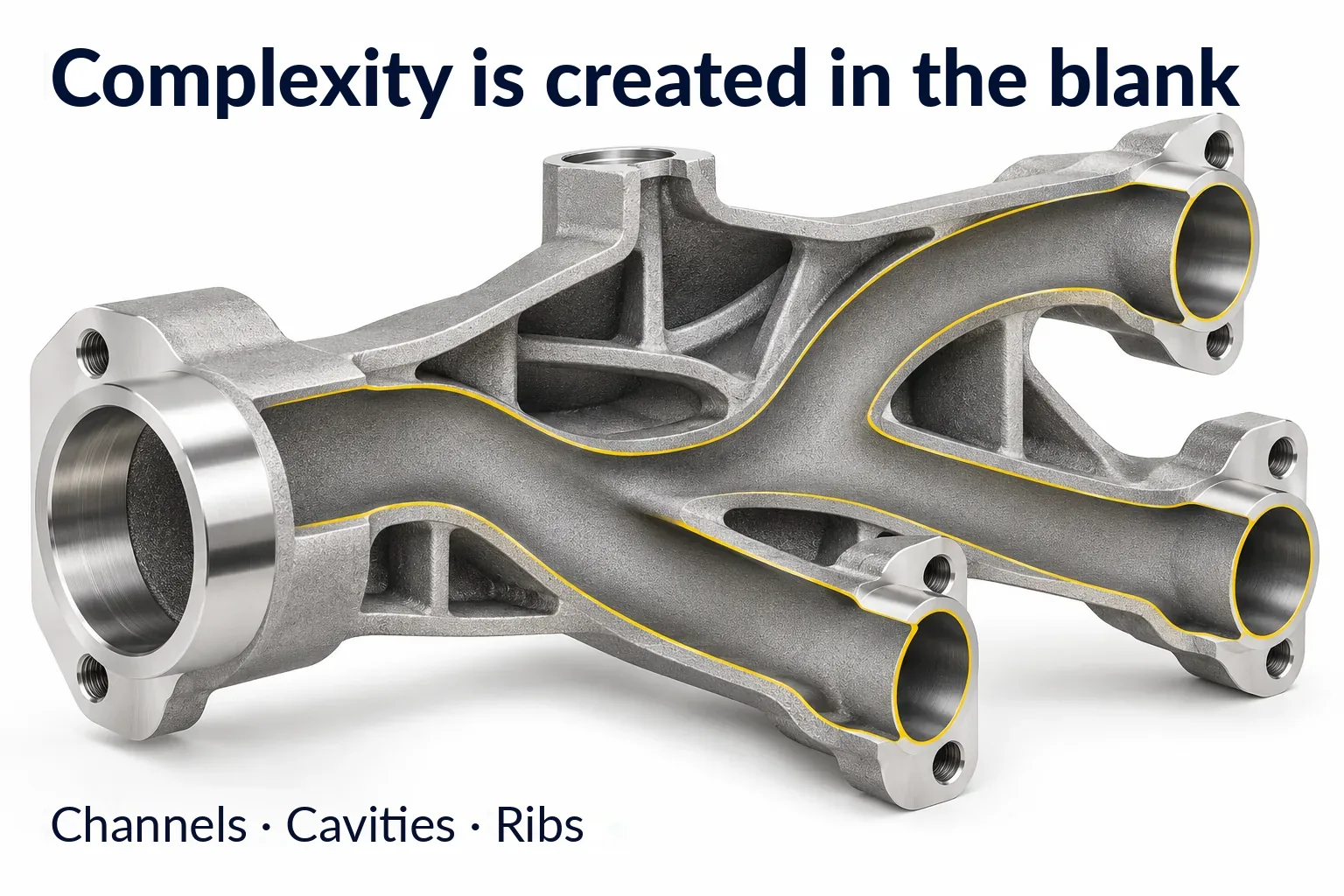
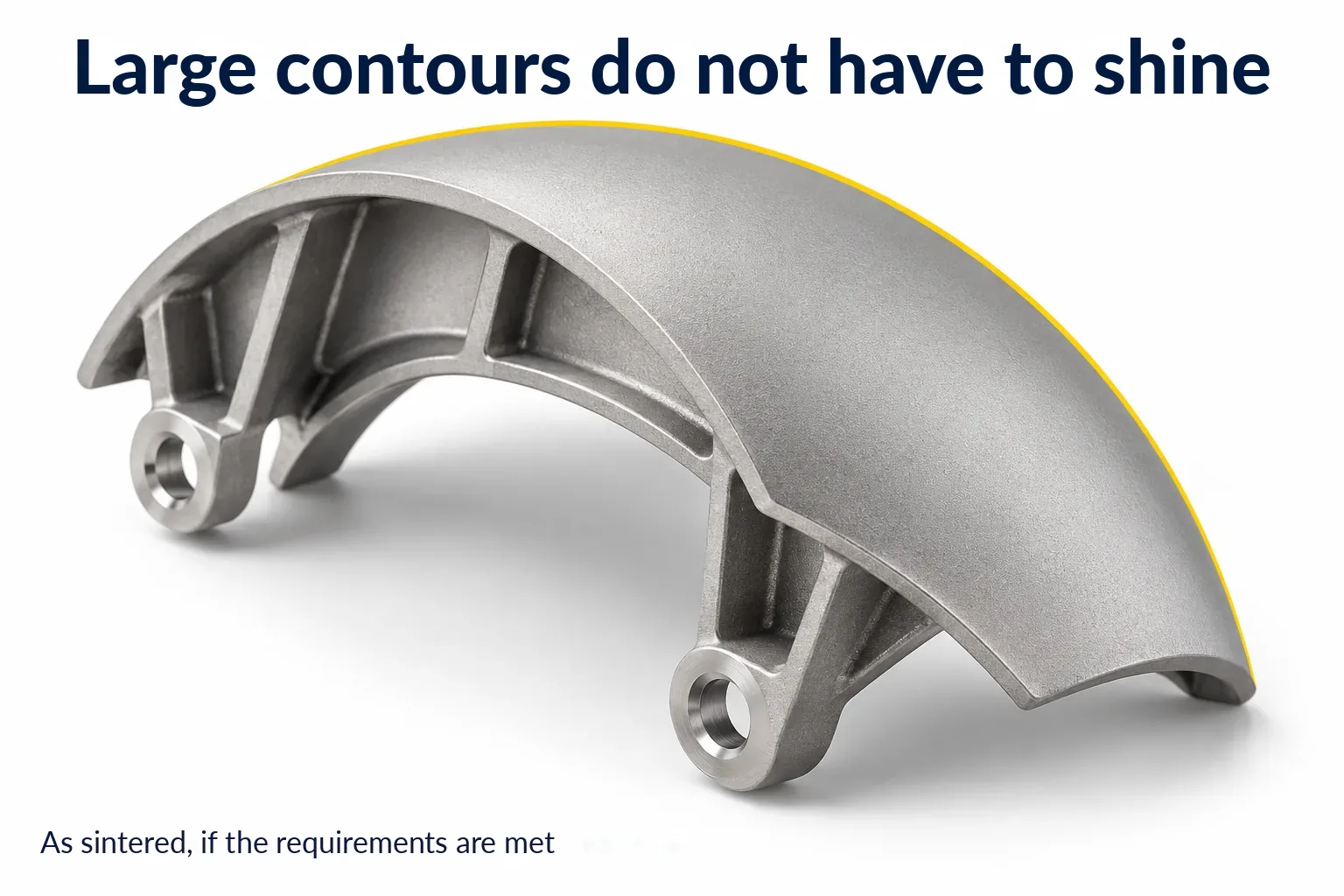
Not every surface has to be machined. Large portions of a well-designed A-MIM blank can remain in the as-sintered state:
- Geometrically non-critical outer regions – shape is right, tolerance is irrelevant
- Non-functional secondary surfaces – visible surfaces without contact or sealing function
- Integrated complexity – internal channels, cavities, ribs that need no fit
- Large-area contours – when dimensional accuracy within sintering capability is sufficient
When post-processing makes sense
Basic economic logic
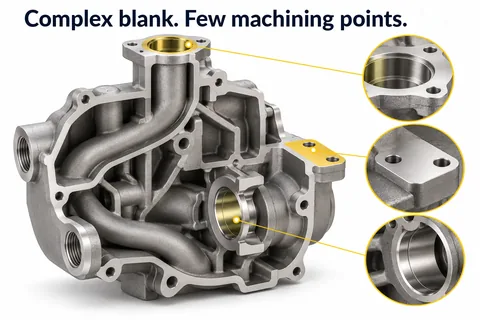
The blank carries the shape → what the function requires is machined → the ready-to-install part is what gets compared.
The fewer surfaces have to be machined, the greater the advantage usually is. A blank machined more extensively can also make sense – for example when it clearly saves material removal or setups compared with machining from solid stock. What matters is the entire manufacturing chain.
Recommendation: provide machining allowances only on the surfaces that need them, and define the scope early – this makes the comparison with other processes reliable.
What this can look like in practice – application concepts with starting situation, possible advantage and remaining machining.
View case examples →