During sintering, a heat treatment below the melting temperature, the metal particles bond, the pores become smaller, and the part densifies and shrinks. How well a geometry withstands this also depends on its shape.
What happens during sintering
Shrinkage
typically about 15–20 % linear
Guideline value, depends on process and material. Not the same in all spatial directions – compensated by scale factors and local corrections
Softening
Temporary
The part briefly loses its dimensional stability in the furnace
Shape change
Risk with unfavorable geometry
Sagging, tipping, warpage – if the geometry allows it
Densification
Particles bond
Pores become smaller, the material densifies. Example binder jetting with stainless steel: density above 96 % according to HP
Why softening matters for design
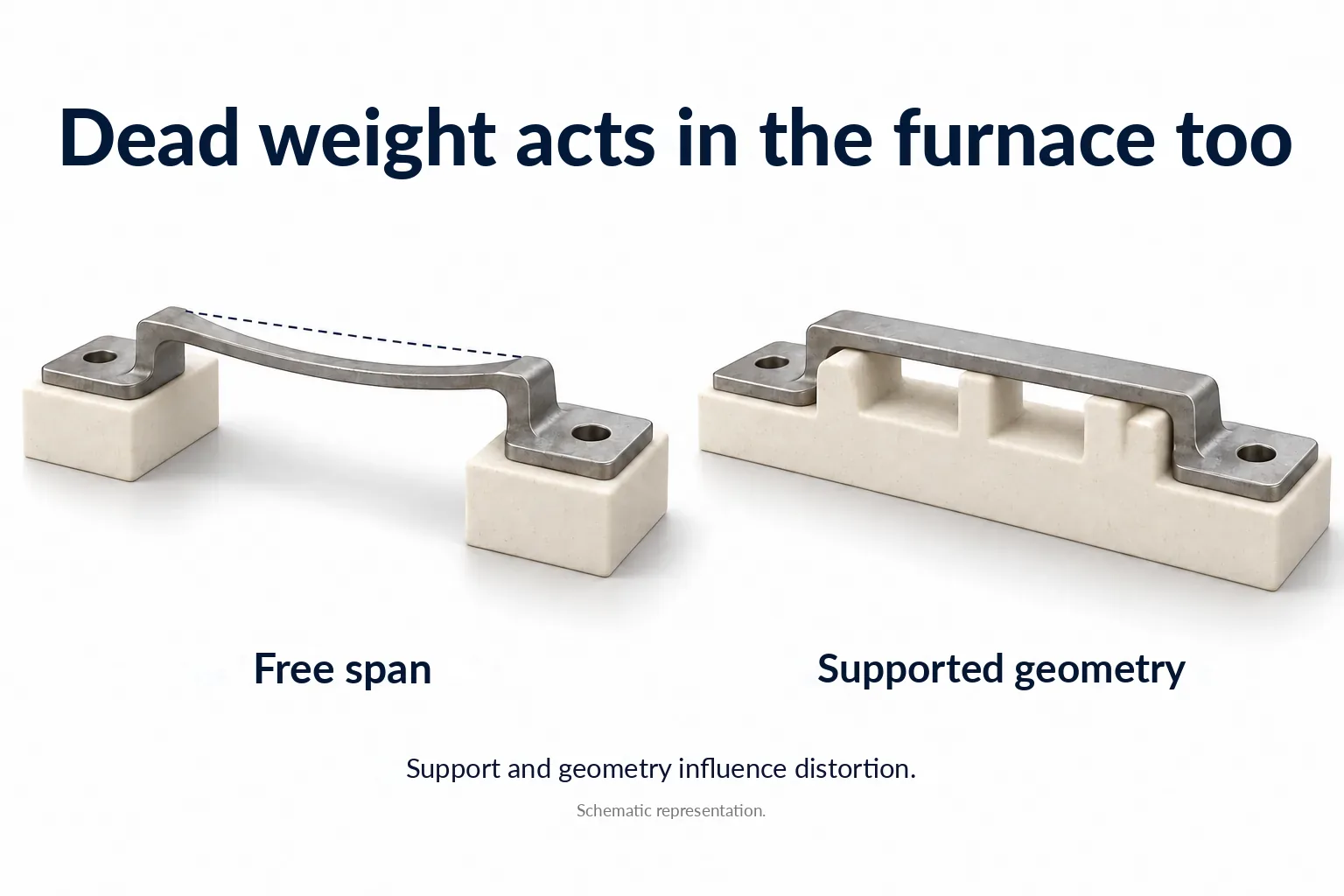
During sintering, the part is no longer rigid. It rests on its support and carries its own weight – at elevated temperature and while it shrinks. Anything that is not stable in this state deforms.
This means that what counts is not only what the CAD model shows, but also how the part sits on its support in the furnace at sintering temperature. The temperature depends on the material.
Which geometries can become critical
Large unsupported surfaces – sag if they do not rest on a support
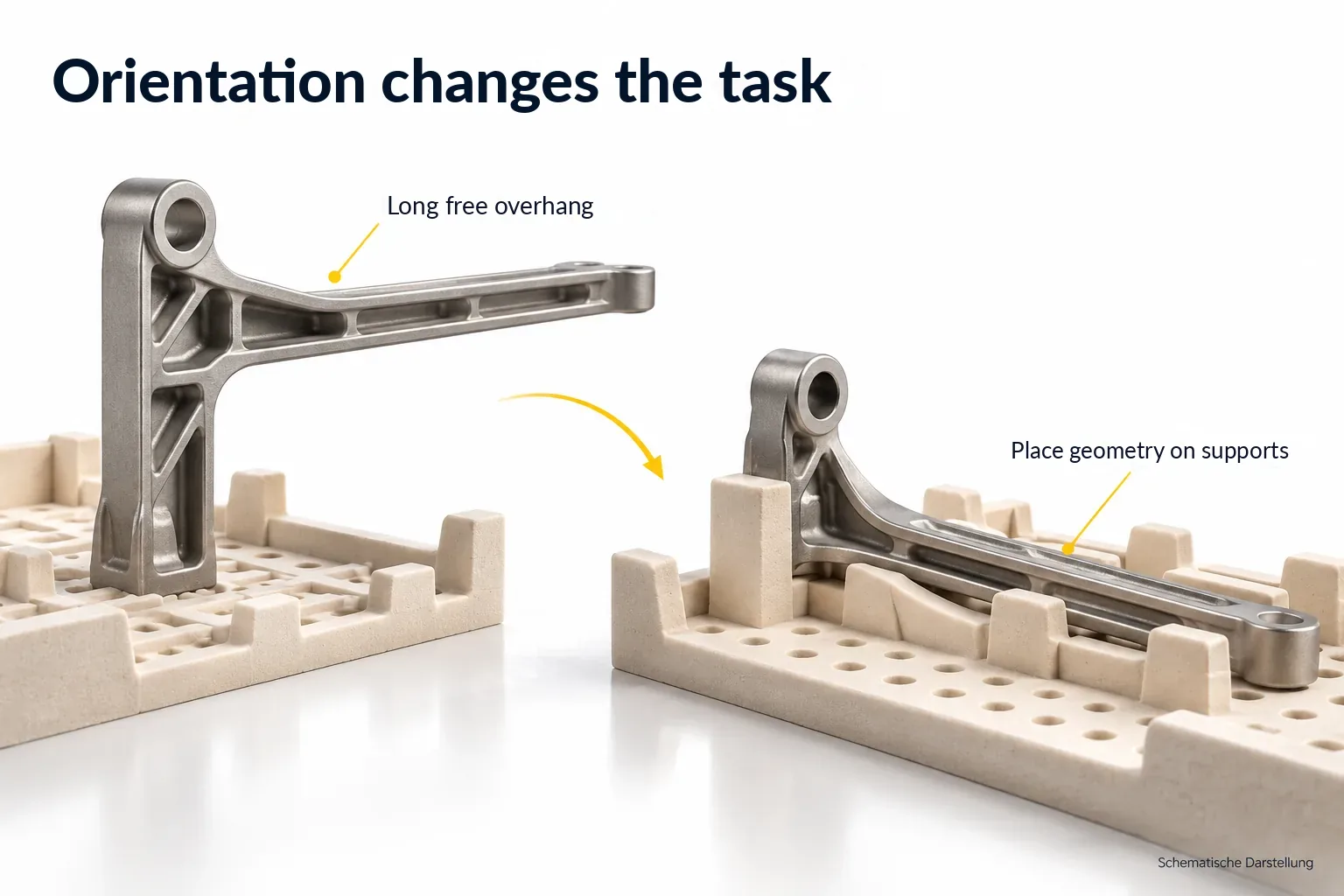
Filigree regions – thin webs, narrow ribs, long overhangs
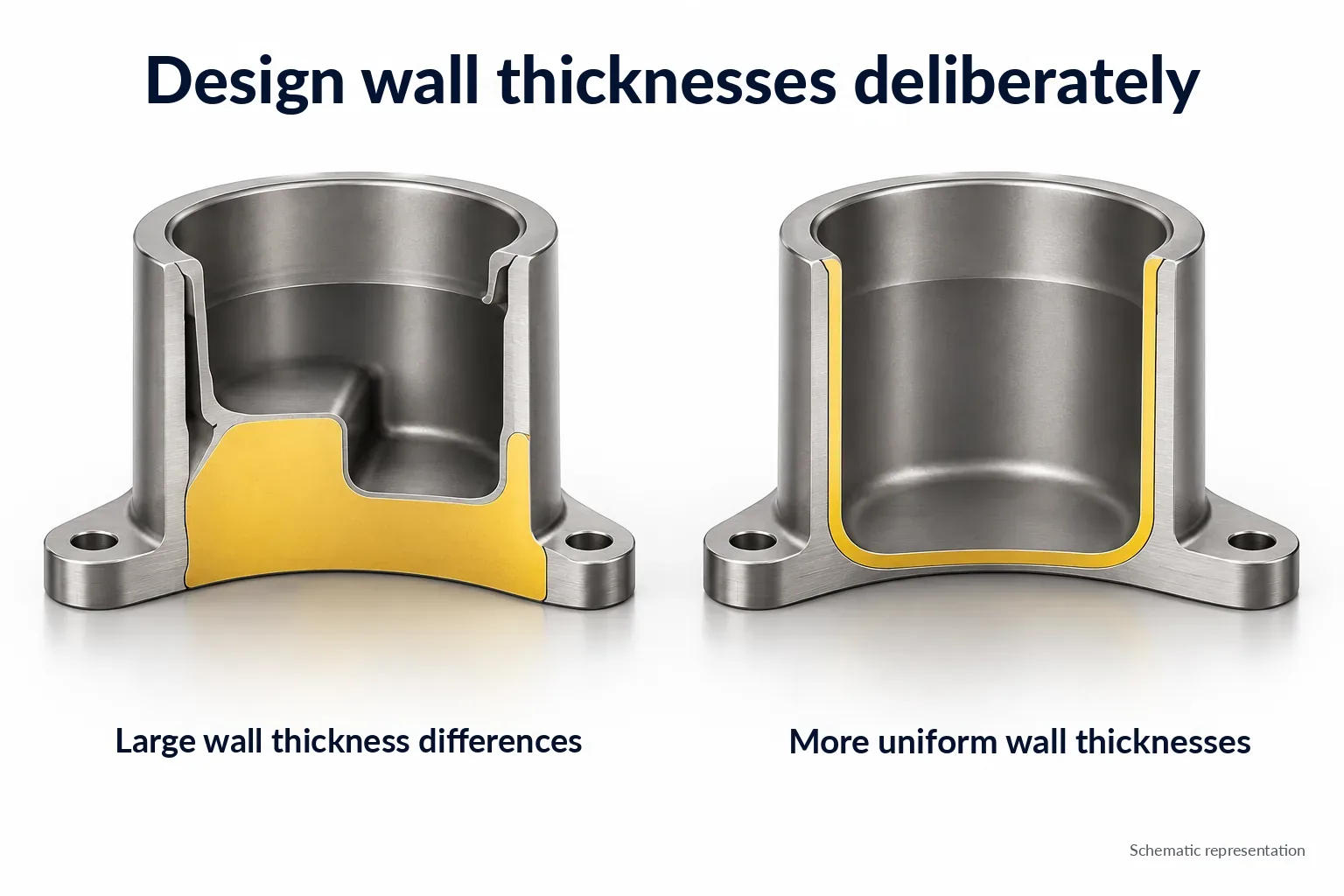
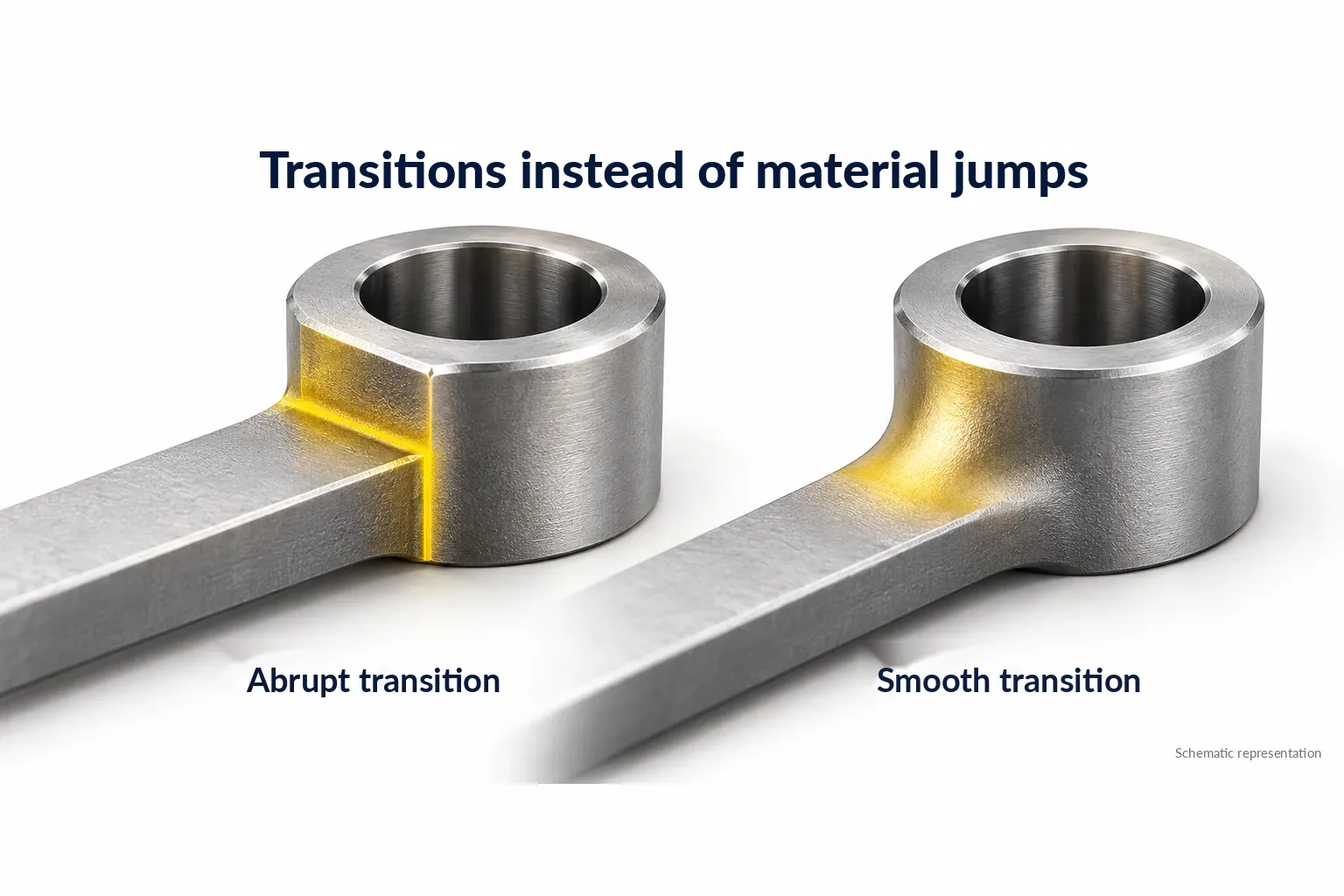
Strong differences in mass – a massive region next to a thin wall shrinks unevenly
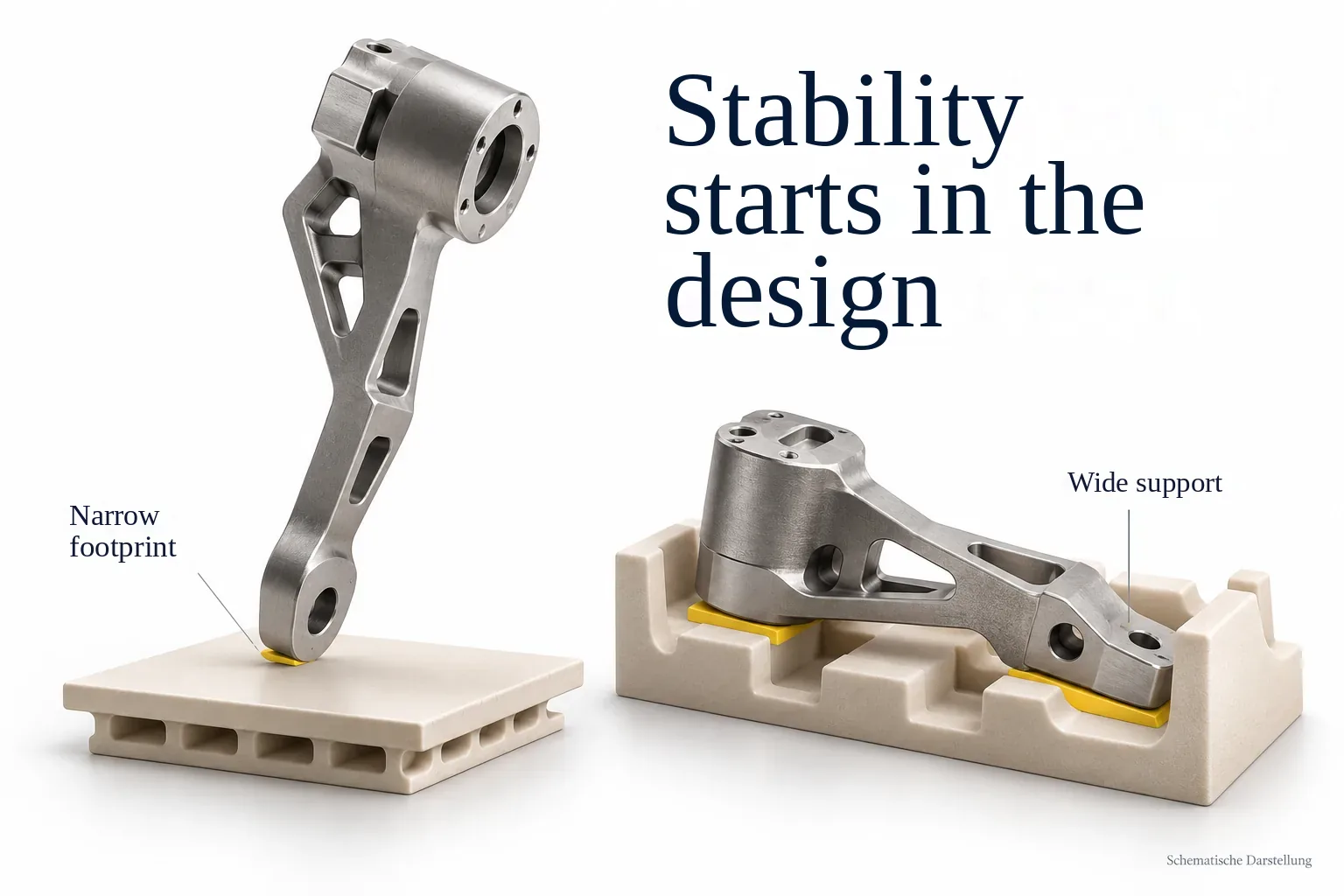
Unfavorable setup situation – when the part rests on a small area and can shift sideways
Setters and defined support
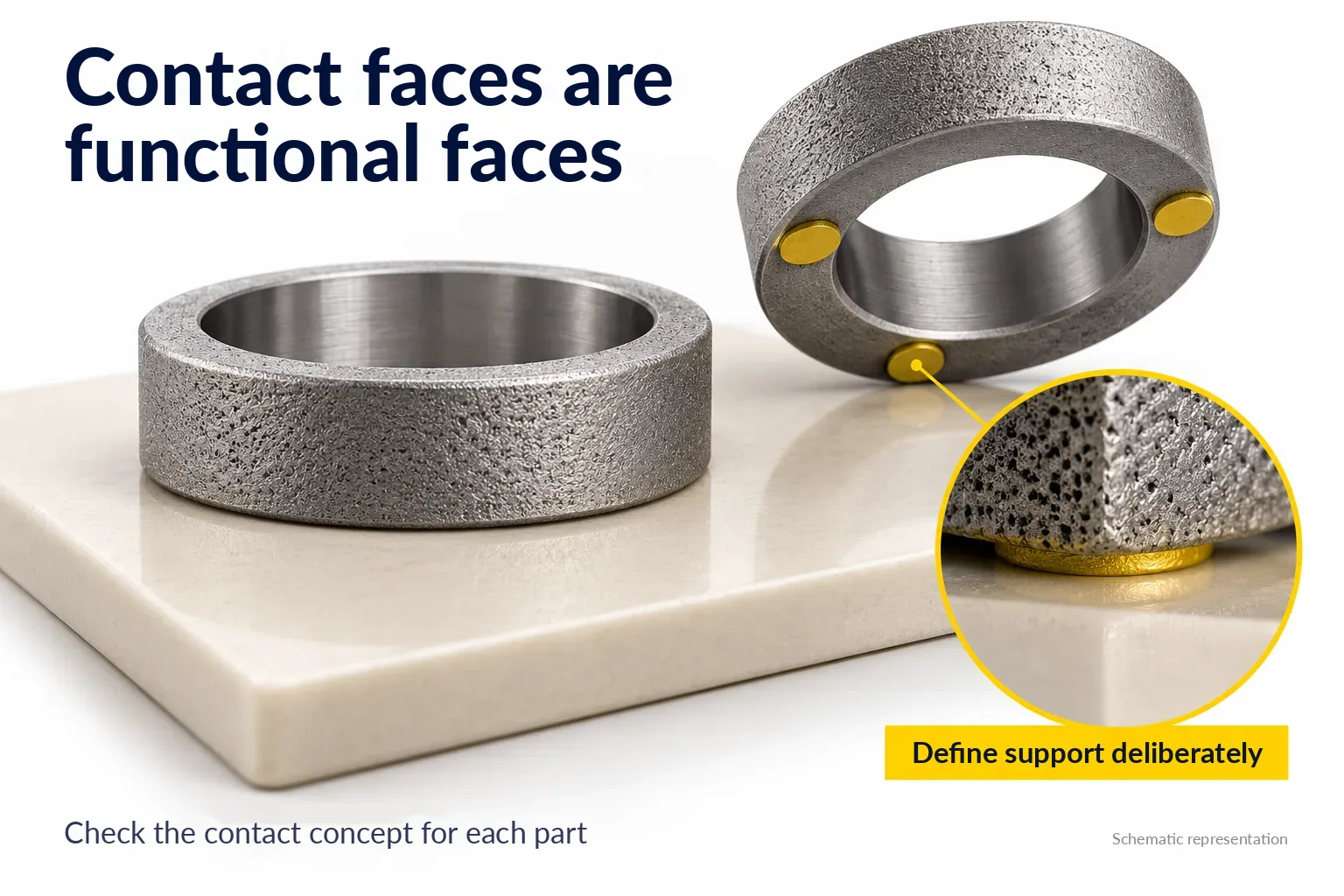
Setters are sintering supports that can be adapted to the part. They support it in the soft phase and reduce sagging. The part must be able to shrink along with the support: friction at the contact surface can hinder it and cause warpage.
Support
Setter supports the part
Large-area parts need areal support
Shape fidelity
Defined contact geometry
Contact surfaces are matched to the underside of the part – with room for movement during shrinkage
Process reliability
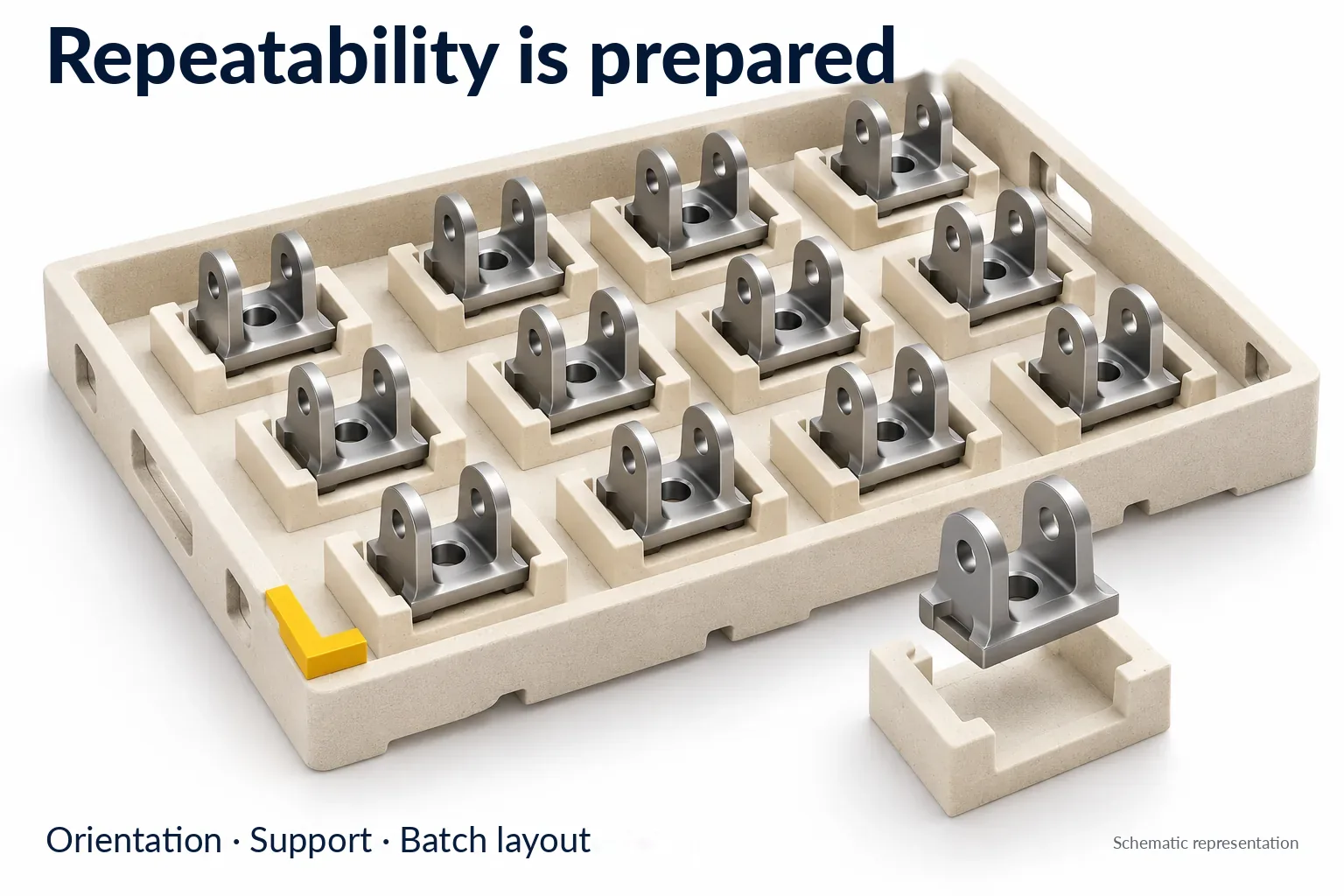
Supporting repeatability
A defined support promotes consistent results. By itself it does not guarantee identical shrinkage or dimensional accuracy
Design influence
Design the underside of the part
Designing a defined support surface makes the process easier
What this means for the design
1
Design for sintering
Lay out the geometry so that the part sits stably in the furnace. No long overhangs without support. No abrupt changes in mass.
2
Consider the support situation
How does the part sit? On which surface? Is there a natural, stable support surface? If not, clarify the setter geometry early.
3
Think blank and sintering strategy together
Orientation, support and shrinkage compensation are defined by manufacturing. Design notes make this easier – they are not a prerequisite for an inquiry.
Once sintering and blank fit together, the next question arises: what is post-processed – and what is not?