
Case Examples
Typical starting points and the route that usually suits them. These are application concepts, not customer projects with guaranteed results – which is why each example states what remains to be checked. The images are AI-generated symbolic images.
Example 1
Inspection fixture for the coordinate measuring machine
Starting point
A part has so far been aligned using modular clamping elements. Every measurement begins with setup, and the result depends on the metrology technician.
Strategy: Additively manufactured fixture with the contour of the part; datum via inserted pins, base plate from the measuring table.
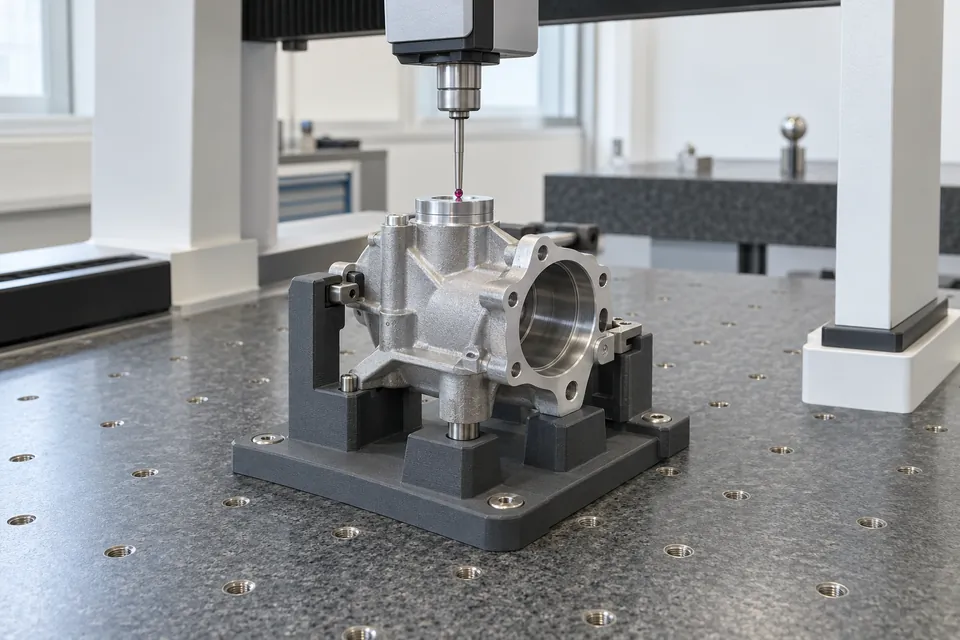
Potential advantage
- Insert instead of set up
- Repeatable position
- New variant = new fixture
Remains to be checked
- Stiffness under probe force
- Datum points in metal
- Thermal behaviour during longer measurements
Example 2
Transport plugs for hydraulic components
Starting point
Open ports are sealed with adhesive tape or purchased universal plugs; these do not always fit, and chips get into the component.
Strategy: First plugs made additively (TPU) for fit and handling; then elastomer production, from about 1,000 pieces per year.
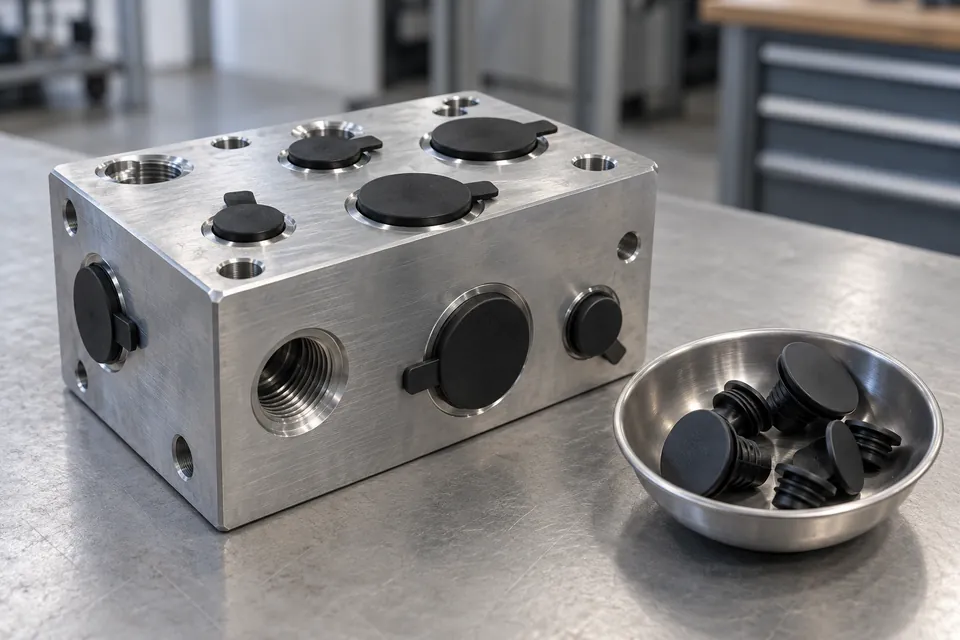
Potential advantage
- Fit for each port
- Tooled part cheaper than printed part in volume
- True rubber properties
Remains to be checked
- Media resistance
- Pull-off force
- Colour coding per size
Example 3
Assembly fixture with product changeovers
Starting point
A milled positioning fixture has to be rebuilt for every product changeover.
Strategy: Hybrid: the profile frame and laser-cut plate remain; only the locating fixtures are printed per variant and swapped via index pins.
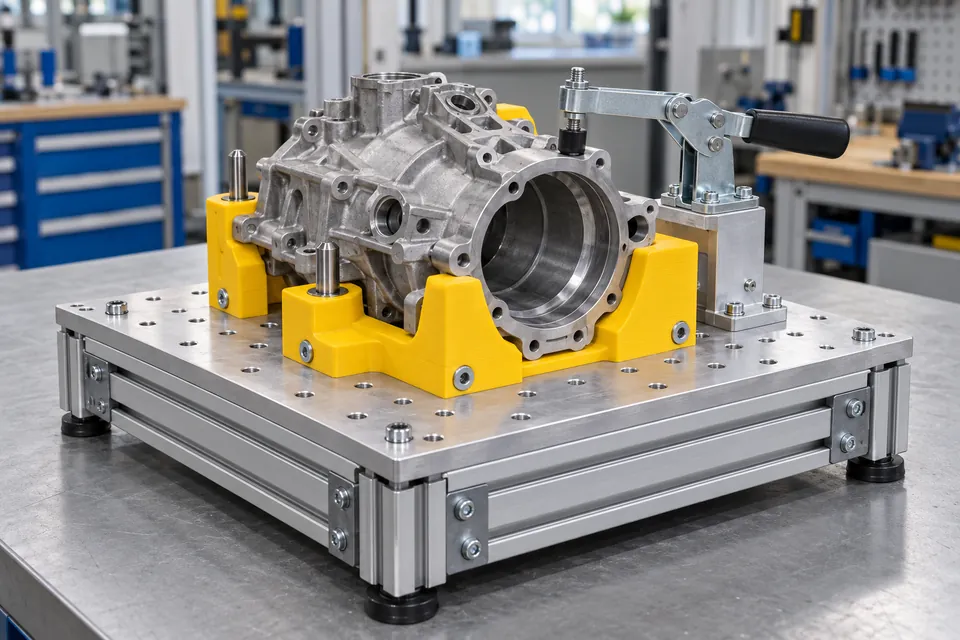
Potential advantage
- Changeover in minutes
- Only the contour is new
- Datums remain in metal
Remains to be checked
- Mix-up protection of the fixtures
- Accuracy of the changeover interface
Example 4
Gripper fingers with soft pads
Starting point
Hard fingers leave marks on visible surfaces; glued-on rubber strips come loose.
Strategy: Fingers made additively (lightweight, variants from one file), pads vacuum-cast in the appropriate Shore hardness, snapped in with a positive fit.
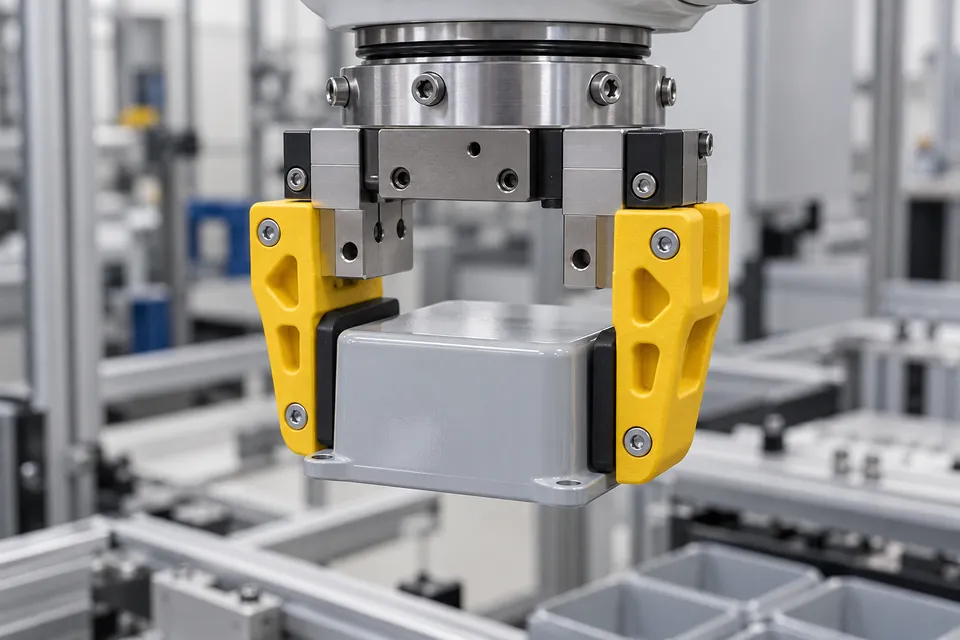
Potential advantage
- Workpiece is protected
- Replaceable pads
- Less moving mass
Remains to be checked
- Abrasion and adhesion of the pads
- Gripping force and stiffness
Example 5
Moulded inserts for workpiece carriers
Starting point
Parts lie loose in crates with foam; scratches occur and loading takes time.
Strategy: Insert sample made additively, series by mould foaming or vacuum casting – every part has its place.
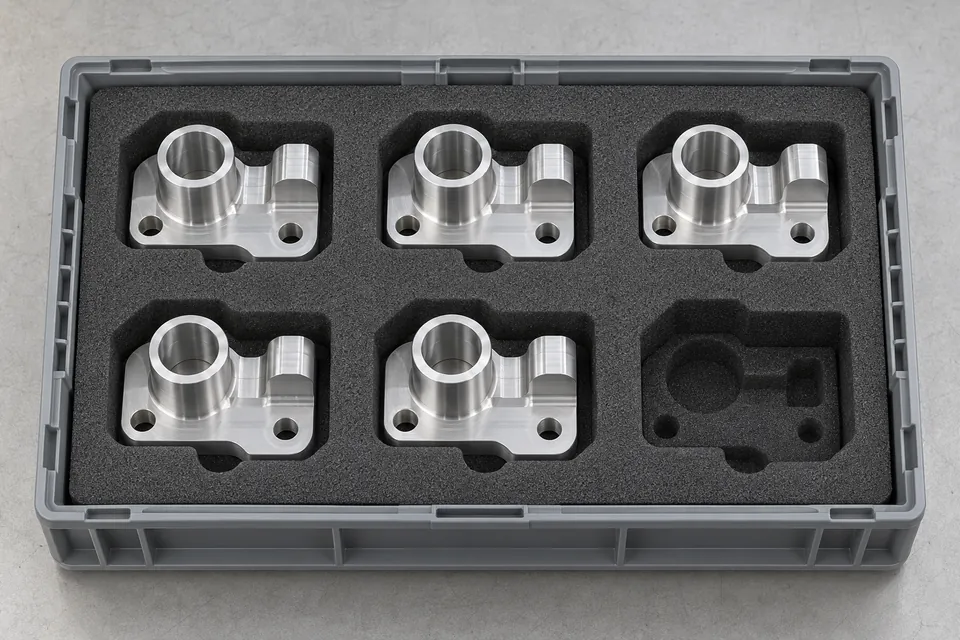
Potential advantage
- Defined position
- Protection from contact
- Countable at a glance
Remains to be checked
- Cleaning
- Stackability
- Abrasion of the insert
An example from FIT
How FIT reworked a drill template for Ascent Aerospace is described on the page Rapid Tooling on fit.technology.