
Applications
Four groups of production aids – and for each, the manufacturing route that usually fits best. The route depends less on the part than on quantity, load and how often it changes.
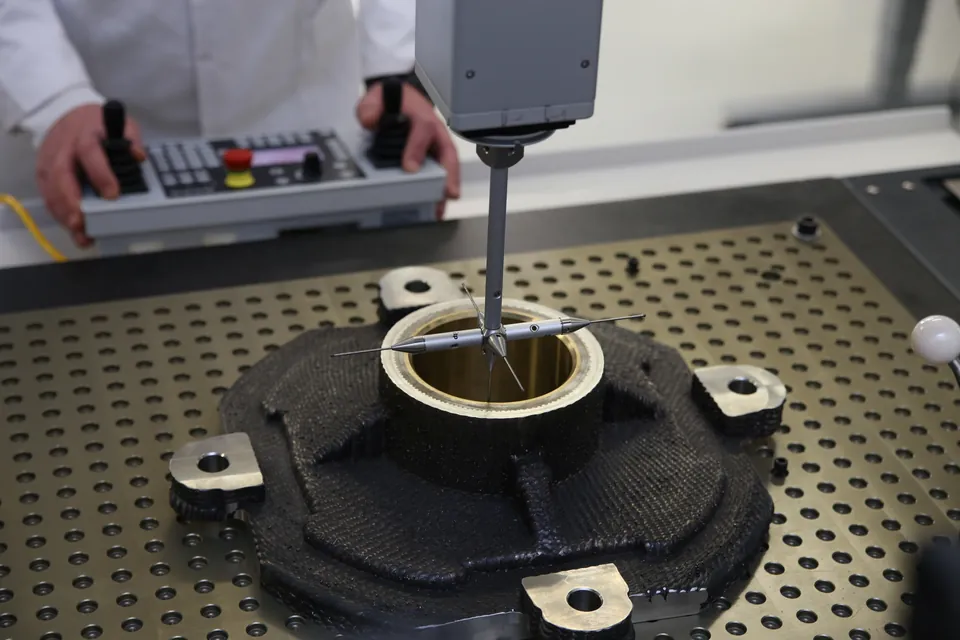
Fixtures and gauges
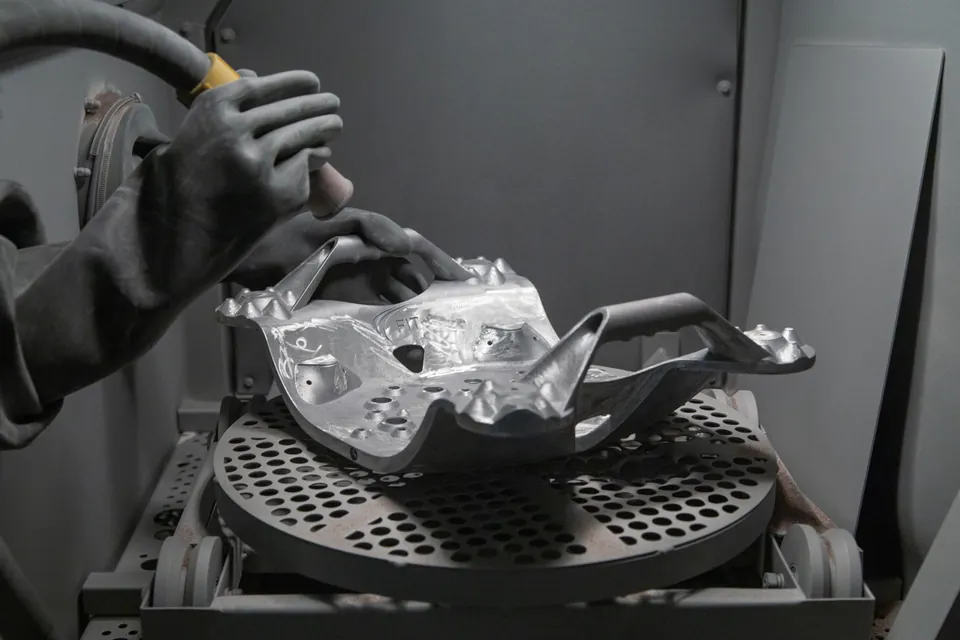
- Assembly, joining and bonding gauges, inspection gauges with defined stops
- Drill templates – Ascent Aerospace use case on fit.technology
- Measuring and clamping fixtures for coordinate measuring machines and machining
Typical route: Locating contour made additively, base plate as a laser-cut blank, datums via purchased parts (index pins, bushings). One-off or few variants.
Gripping and handling
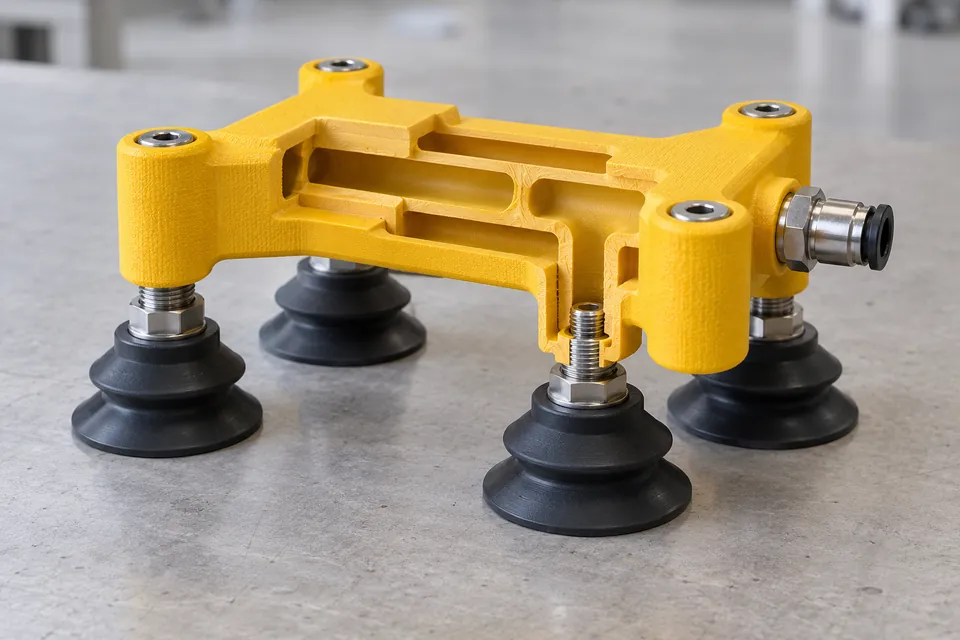
- Gripper jaws and fingers for parallel and centric grippers, contoured to the workpiece
- Suction gripper carriers with vacuum channels in the part instead of hoses and fittings
- Nests for workpiece carriers and feeders
Typical route: Carriers and fingers made additively (weight, channels, variants); soft contact pads as elastomer or vacuum-cast parts, so that grip and abrasion are right and the pads can be replaced.
Transport and protection in production
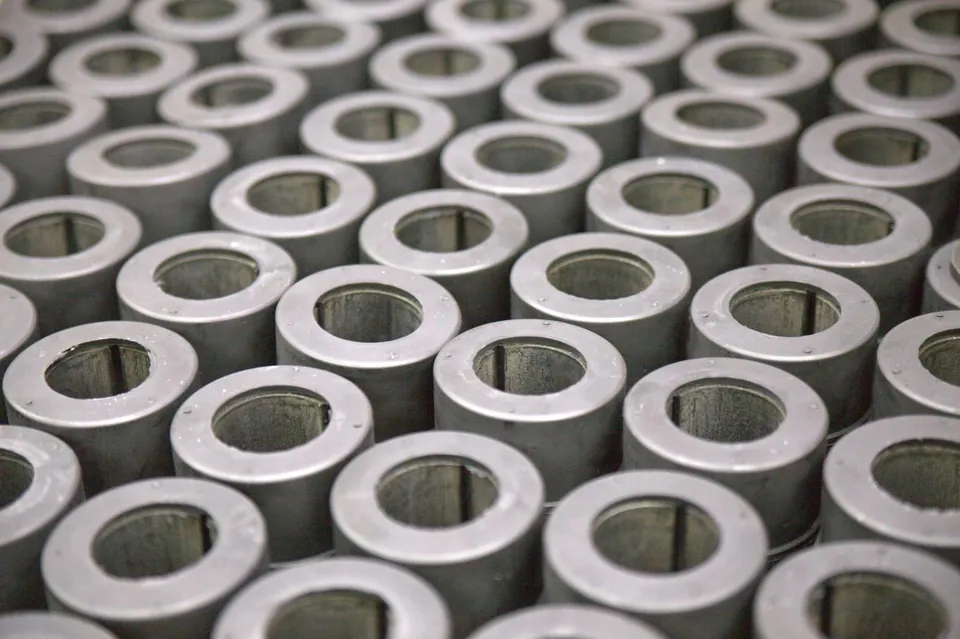
- Transport plugs and protective caps for bores, threads and ports
- Moulded inserts for workpiece carriers and transport containers – the part sits in a defined position and touches nothing
- Impact protection and cushioning for sensitive surfaces
Typical route: These are consumable and high-volume parts. First samples made additively, then elastomer production or injection moulding with additively manufactured tooling (1,000–100,000 and 1,000–50,000 pieces per tool, respectively) or mould foaming for cushioning.
Tooling
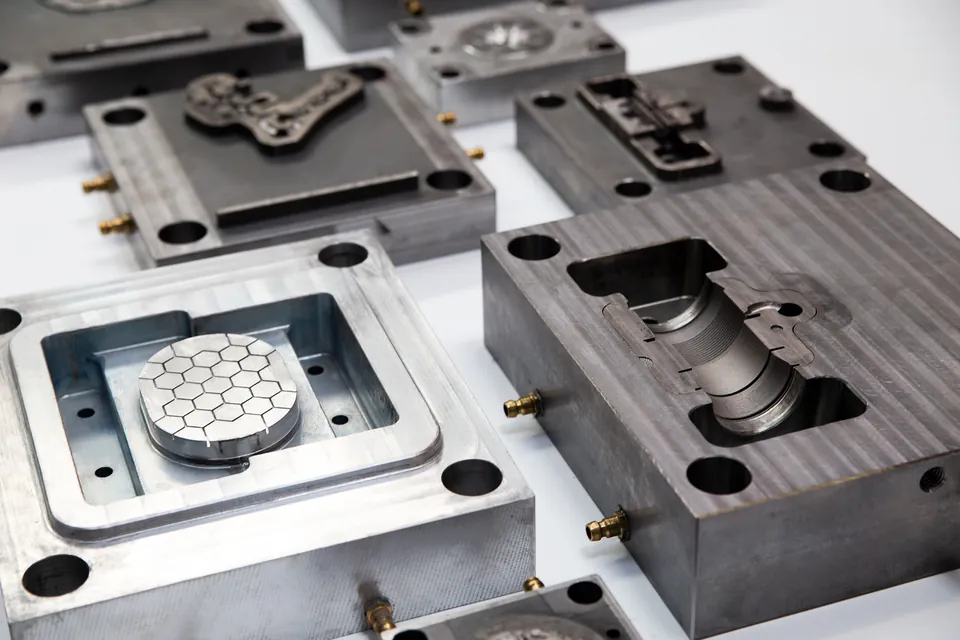
- Injection moulds for small series: additively made from aluminium or steel, within a few days; parts up to 200 × 200 mm
- Special tools: embossing dies, cutting tools, deep-drawing and RIM tools
Typical route: The tool is additive, the parts made from it are conventional – this is how additive manufacturing becomes series production. Figures according to fit.technology, Rapid Tooling.