
Wire-based DED produces blanks. Not finished parts.
Material deposition is usually only the first step. Dimensional accuracy, surfaces, and functional contours result from the right post-processing.
Whether built hybrid or purely additively: in many cases, wire-based DED delivers a near-net-shape blank. The part is close to the target geometry but needs targeted machining for precise surfaces, bores, fits, and functional areas.
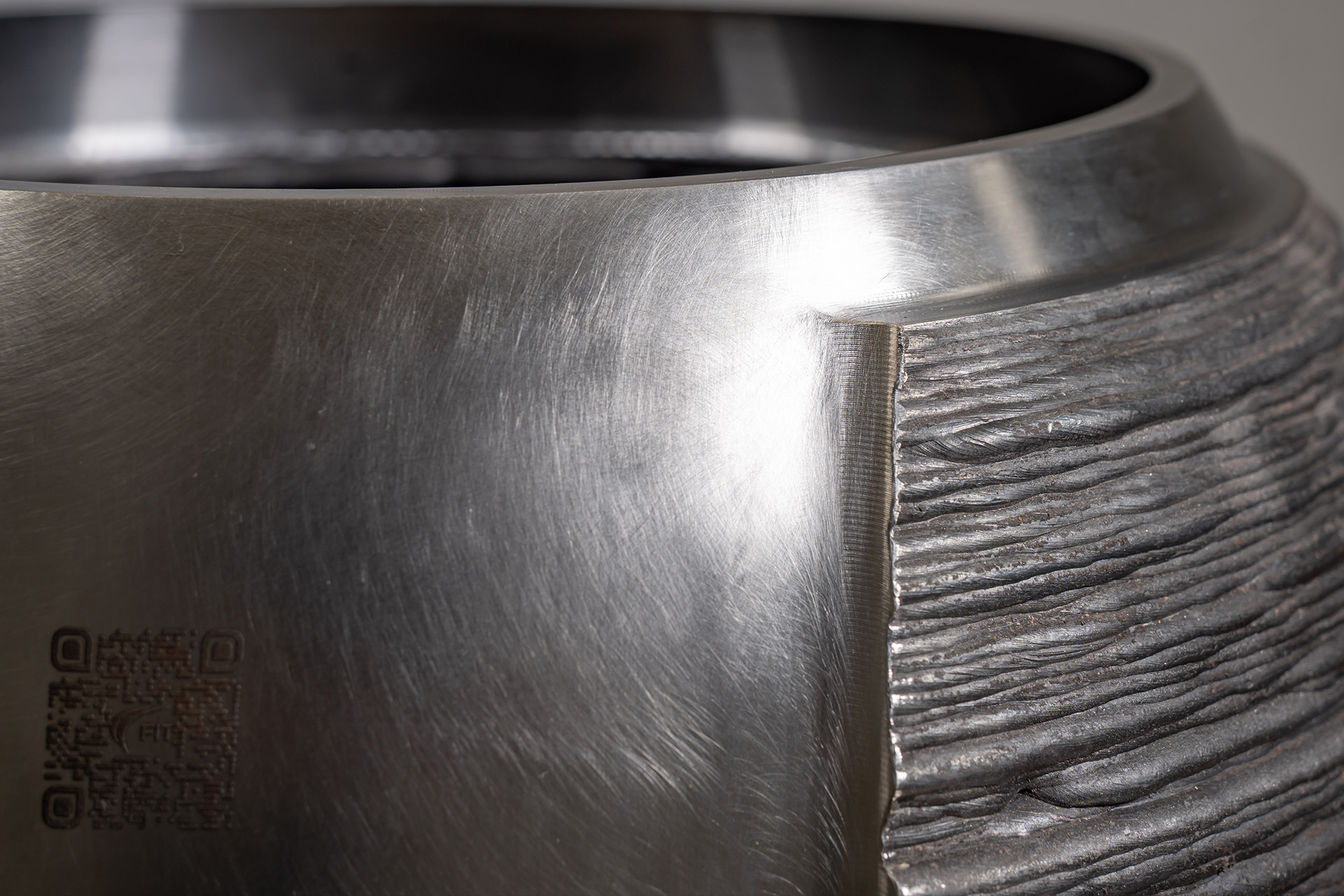
Not every detail belongs in the build.
Small details are often not sensibly producible additively. Bores, threads, sharp edges, small radii, narrow grooves, sealing surfaces, and fits are usually better produced by milling, drilling, turning, grinding, or EDM.
Post-processing creates precision.
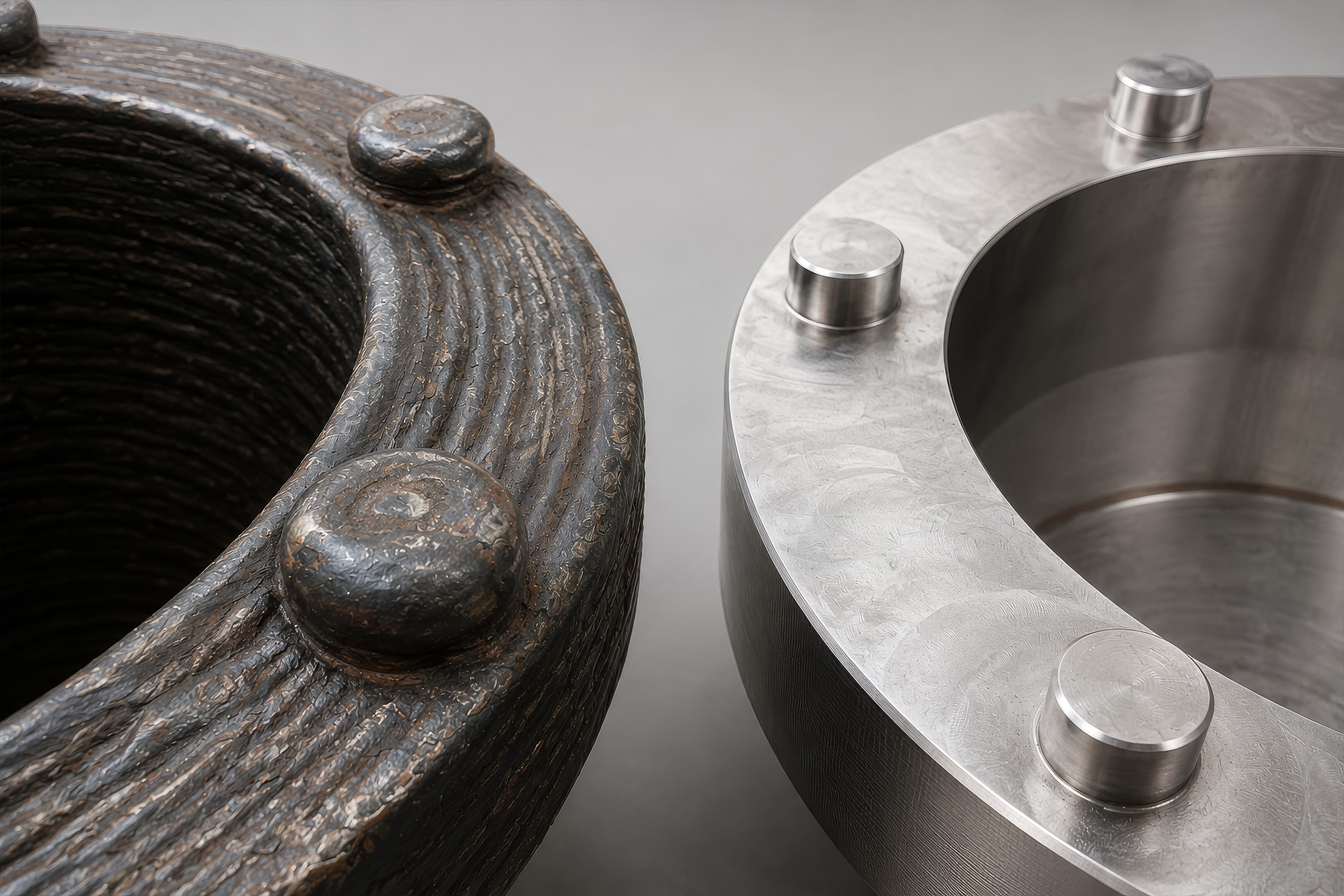
Too little machining allowance is a risk. Too much is a cost.
The blank must contain enough material for the final contour to be machined out reliably. Too little machining allowance jeopardizes dimensional accuracy and surface. Too much machining allowance increases build time, heat input, and machining effort.
- Where does the part need machining allowance?
- Which surfaces are functionally critical?
- How much material has to be removed later?
- Where does additional machining allowance create unnecessary heat?
The weld bead is not a functional surface.
Additively built surfaces show weld bead structure, waviness, and process marks. For sealing surfaces, bearing seats, fits, or defined contact surfaces, post-processing is a fixed part of the process chain.
- Dimensional accuracy
- Defined roughness
- Flat surfaces
- Round bores
- Precise seats
- Reproducible functional surfaces
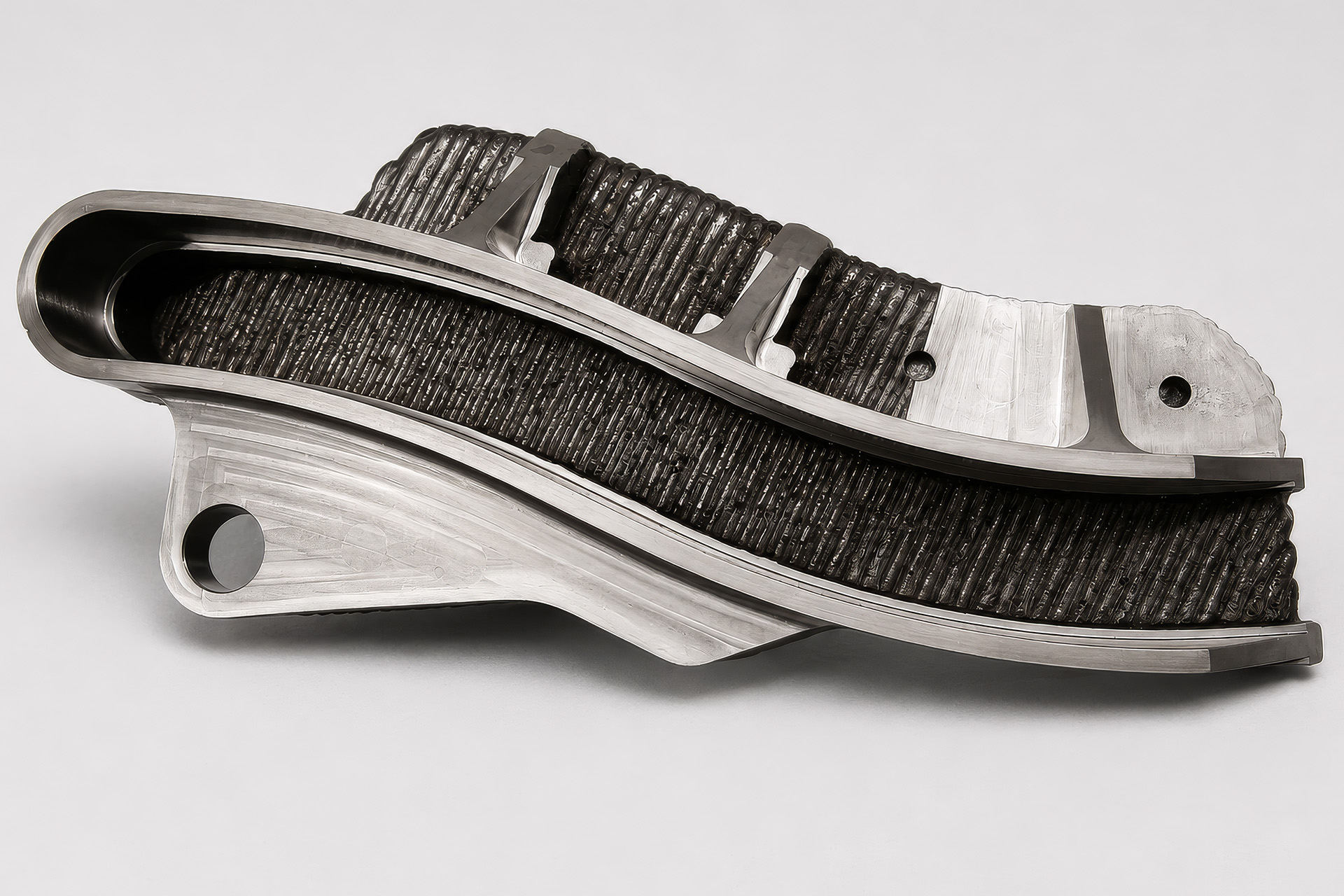
What cannot be reached cannot be finish-machined.
Post-processing needs access. Deep pockets, concealed surfaces, narrow interior spaces, and unfavourable angles can prevent precise functional surfaces from being produced later.
- Internal mating surfaces
- Deep bores without tool access
- Undercuts
- Narrow gaps
- Geometries that are hard to clamp
- Functional surfaces behind build zones
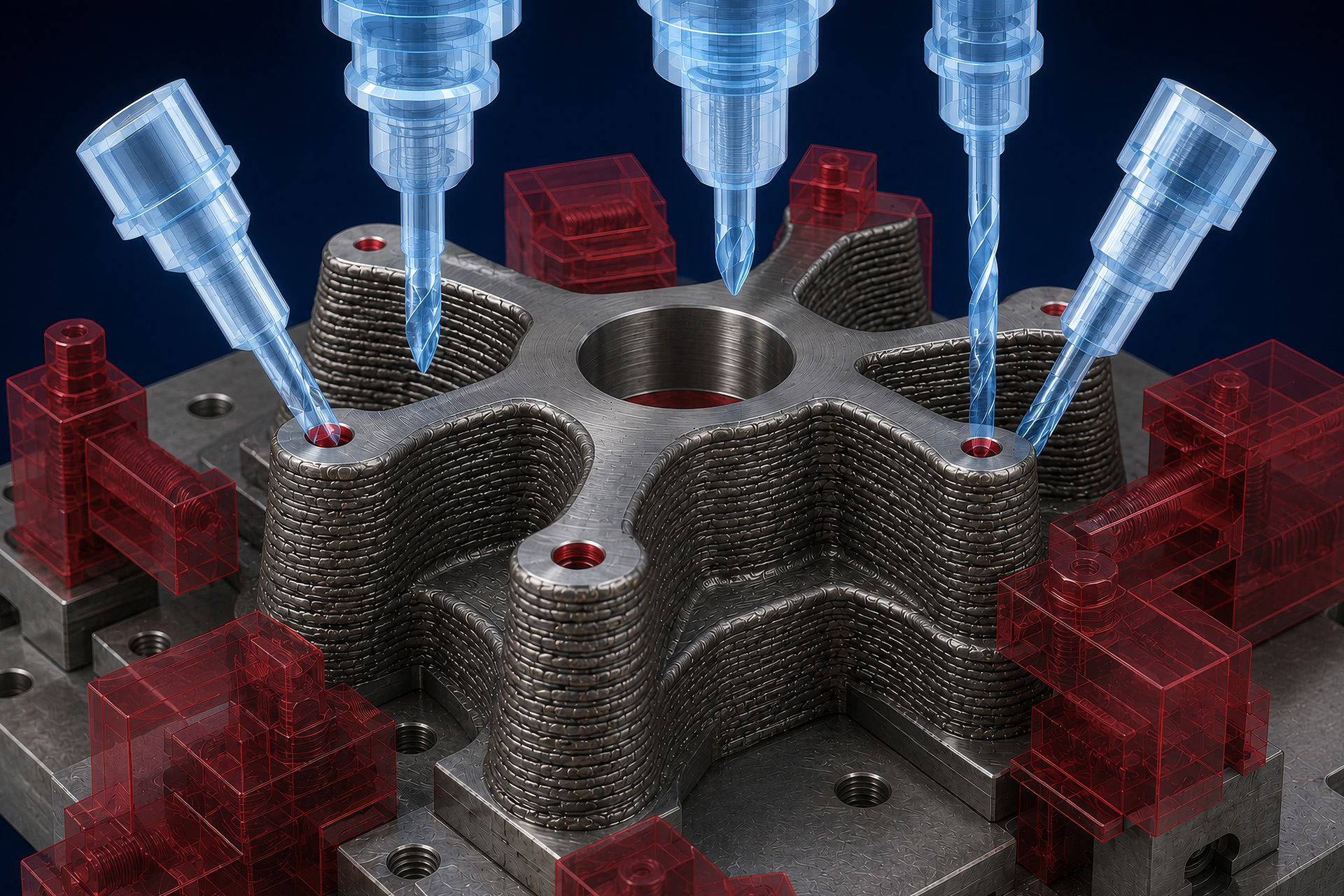
Post-processing begins before the build.
For precise finishing, the part needs reference surfaces, clamping options, and stable machining positions. These must be considered at the blank stage.
- Reference surfaces
- Clamping surfaces
- Machining directions
- Stability during milling
- Sequence of process steps
- Distortion after heat input
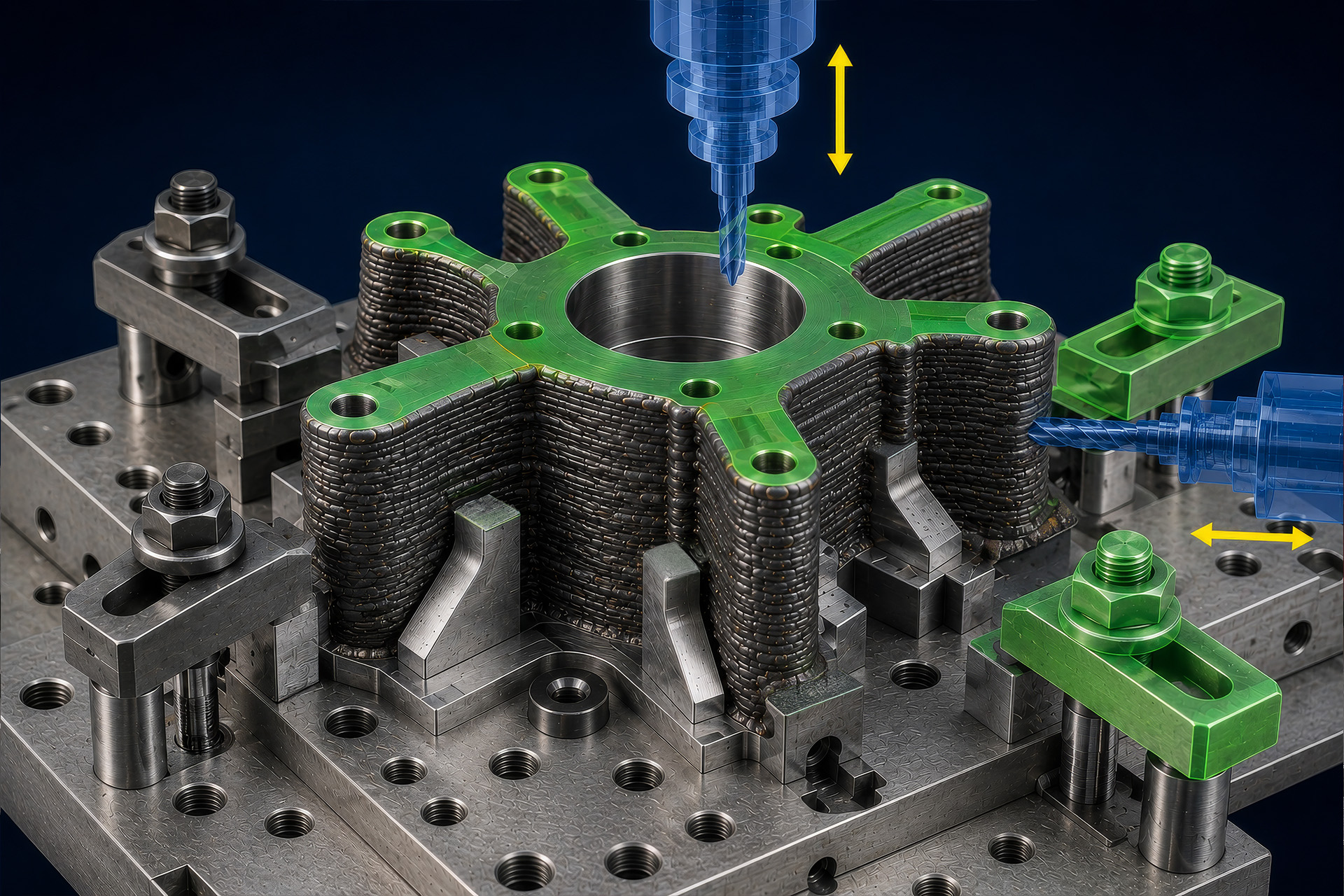
Heat changes the blank.
Wire-based DED introduces a lot of energy locally. As a result, the base body or additively built regions can distort. Post-processing must take this actual state into account, not the ideal CAD geometry.
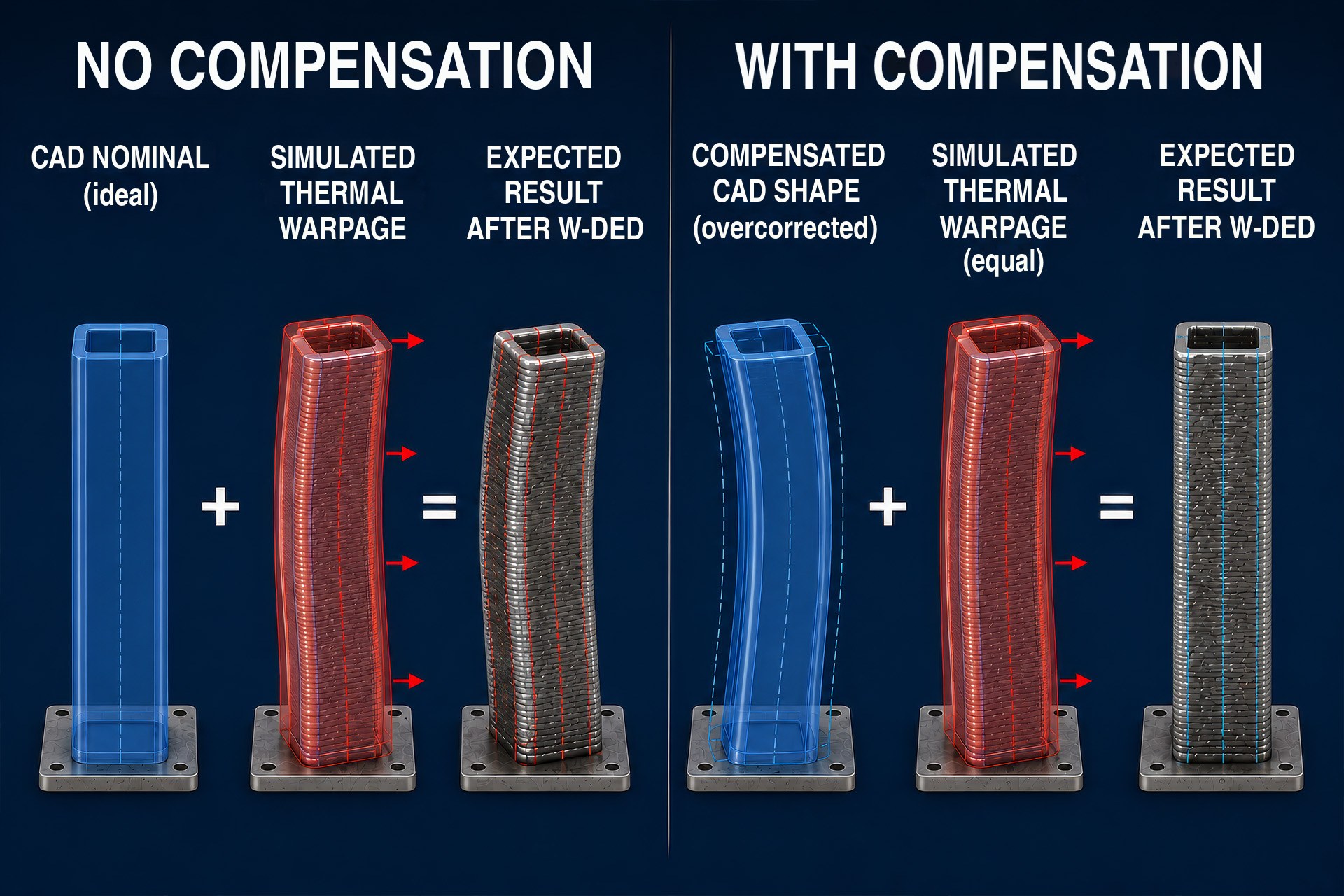
Think blank first. Then finished part.
Good planning clearly separates additively built volume from precision created later.
- Which regions are built up?
- Which regions are machined?
- Where is machining allowance needed?
- Where are reference surfaces needed?
- Is tool access ensured?
- Which tolerances only result at the end?
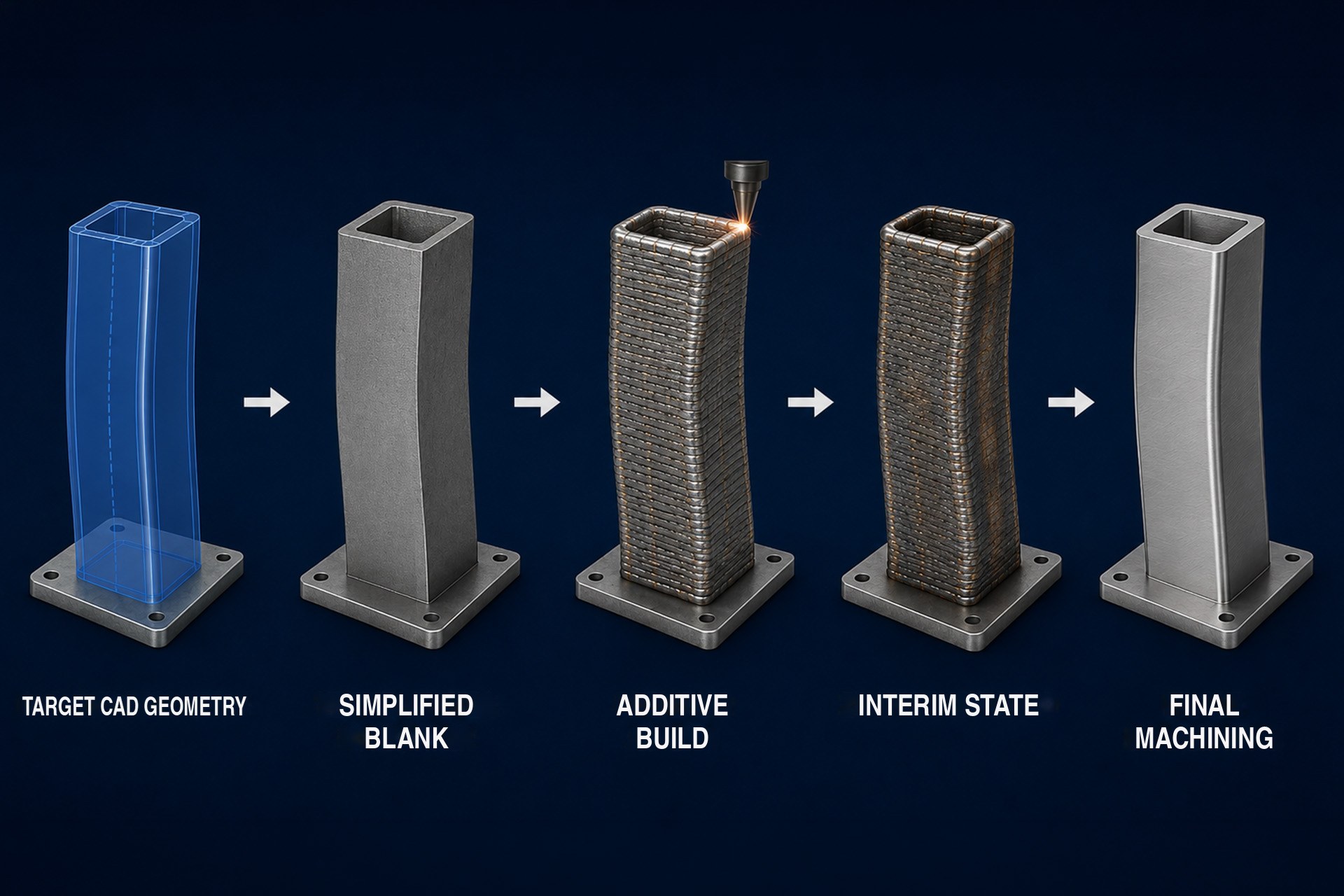
The limit of the process is often the limit of the process chain.
Wire-based DED becomes strong when build-up and post-processing are considered together. Anyone who looks only at the final geometry overlooks the real lever: the right blank for the right finishing.