
Where wire-based DED makes sense.
Wire-based material deposition becomes interesting when conventional manufacturing becomes too heavy, too slow, too expensive, or too inflexible.
The strength lies not in “printing arbitrary parts” but in industrial situations where targeted metal deposition creates a real advantage: large structures, repair, reinforcement, functional zones, and hybrid manufacturing.
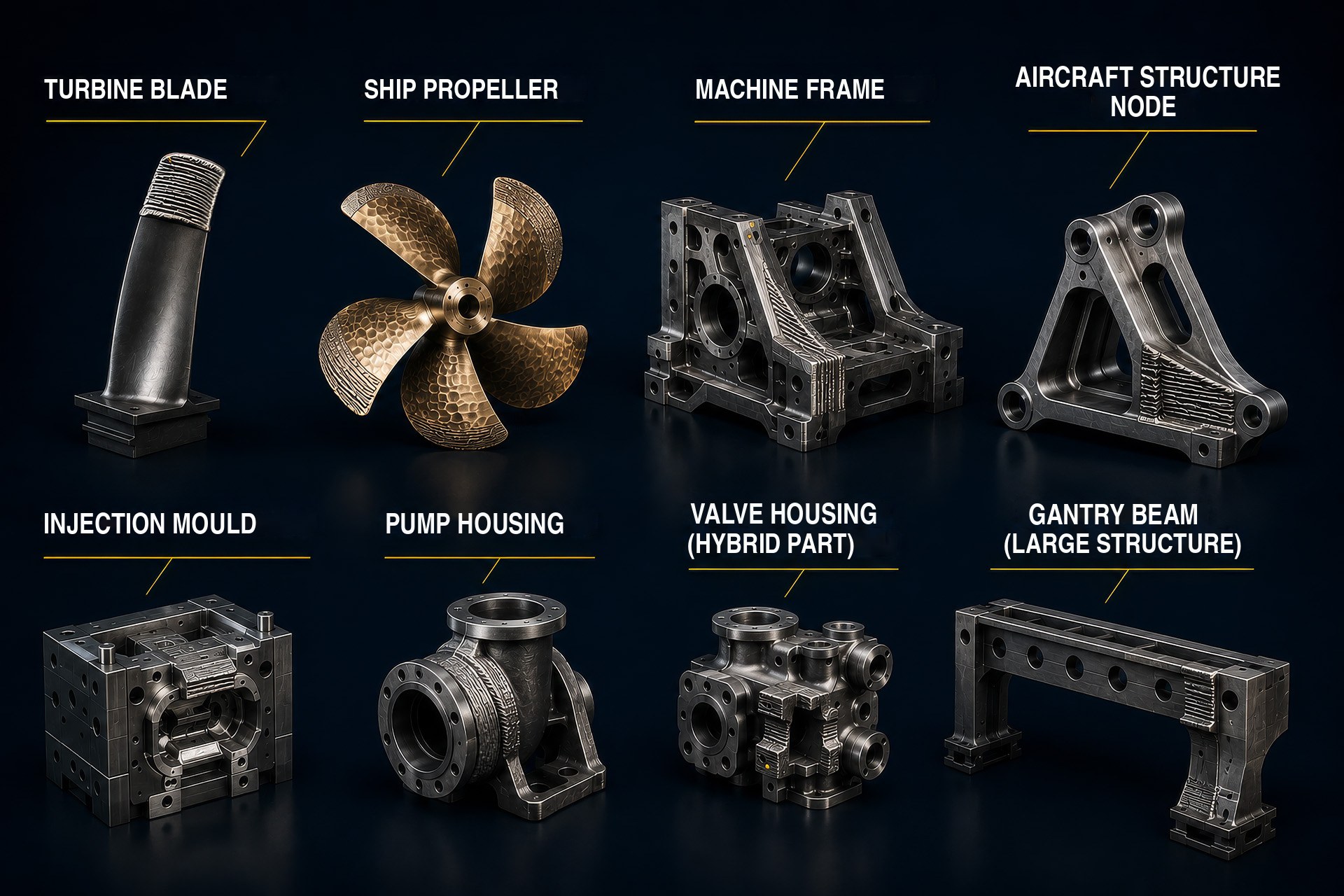
When parts become larger than standard processes can handle economically.
Wire-based DED can become interesting for large metallic structures when complete raw blocks, casting moulds, or large weldments cause high effort.
- Machine frames
- Support structures
- Maritime components
- Energy equipment
- Large brackets
- Solid connecting elements

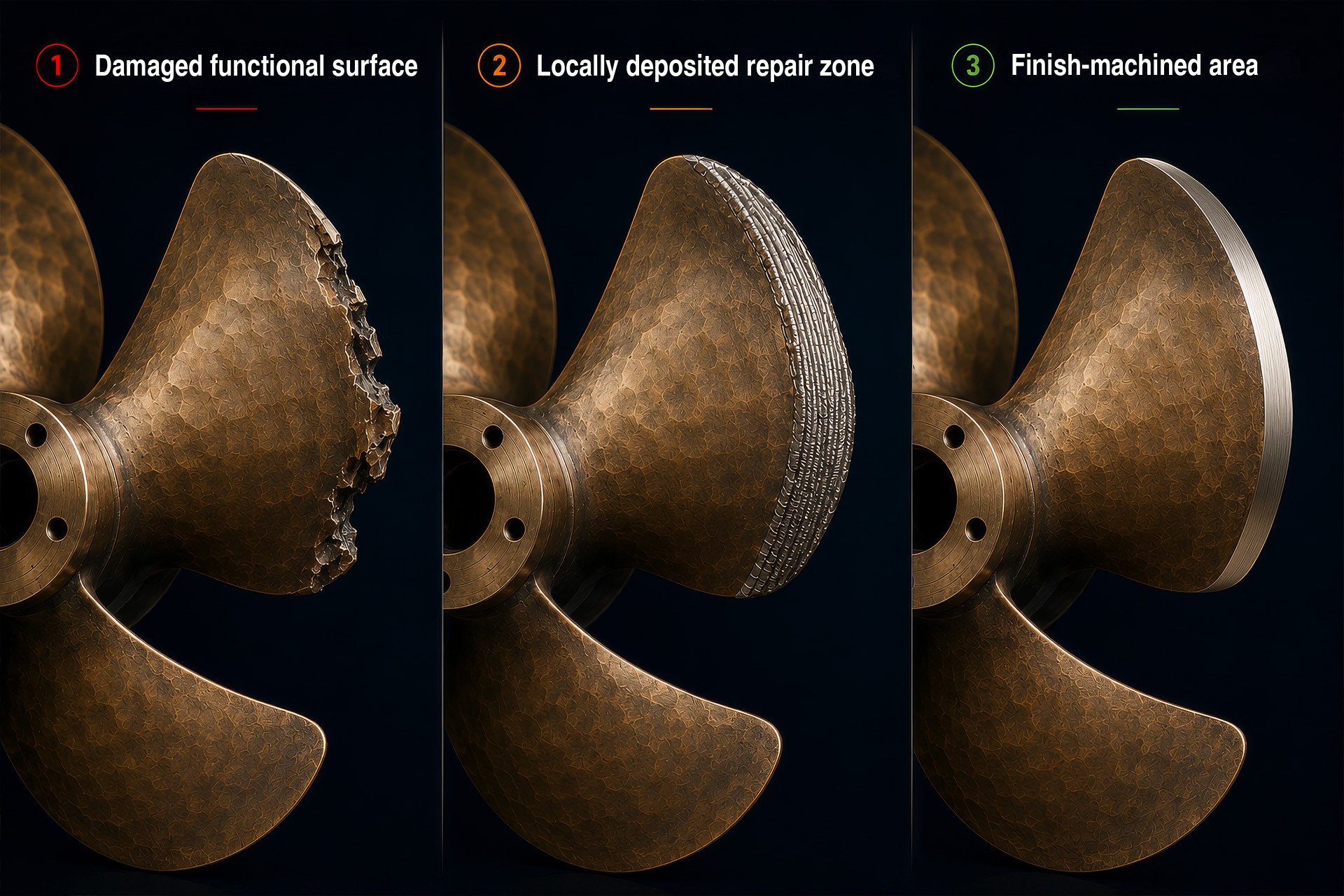
Do not replace the entire part when only one zone is damaged.
Many expensive components fail not because the entire part is destroyed, but because a functional surface, edge, bearing location, or wear zone has been damaged.
Wire-based DED can rebuild material locally.
- Worn bearing areas
- Damaged sealing surfaces
- Tool edges
- Corrosion zones
- Blade or edge regions
- Local breakouts
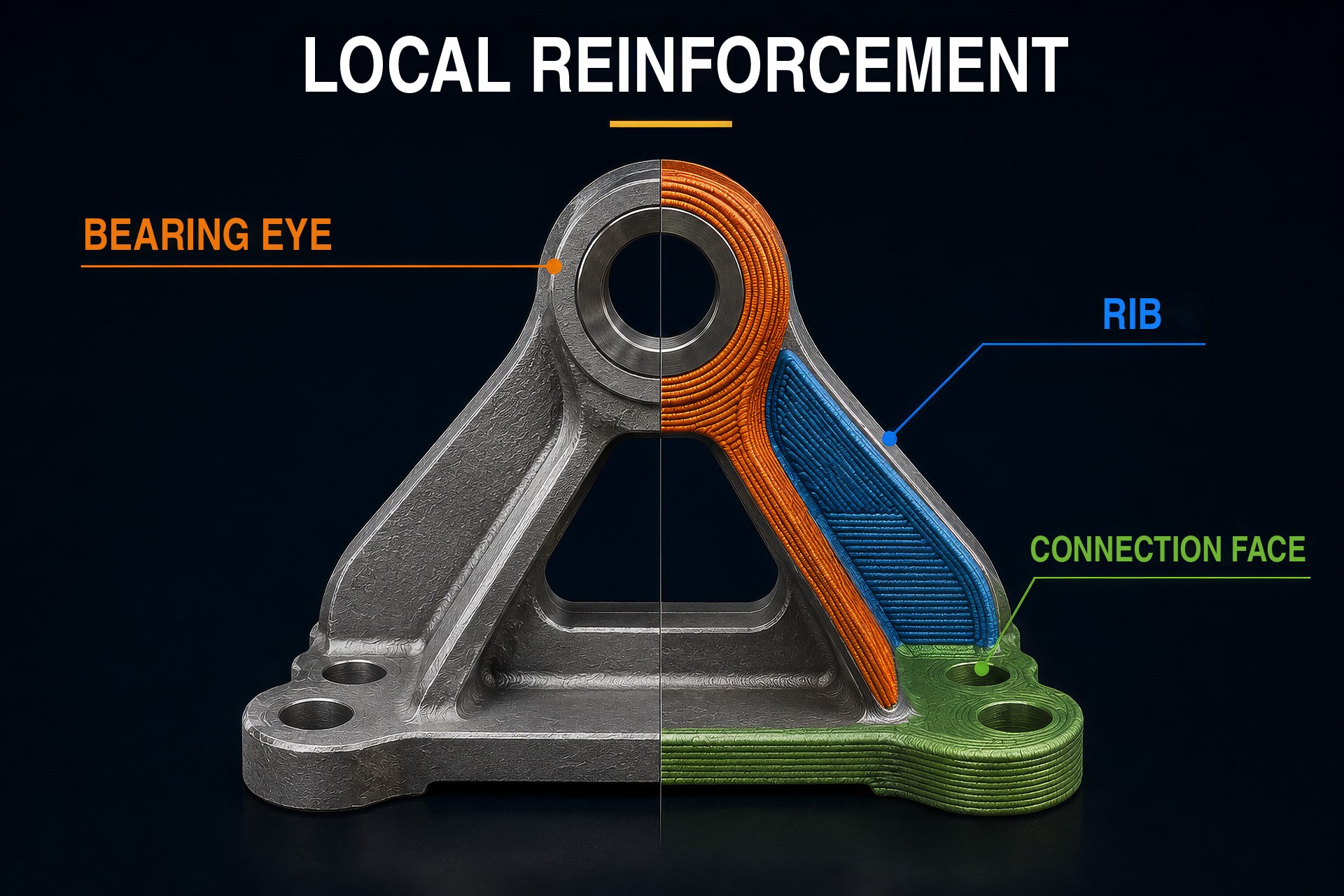
Add material where load arises.
Sometimes the base part is sufficient, but individual regions need more stiffness, wear protection, or connection surface. Then local material deposition can be more economical than making the entire part more massive.
- Reinforcement ribs
- Additional seating surfaces
- Connection areas
- Bearing zones
- Load introduction areas
- Local wall thickness increase
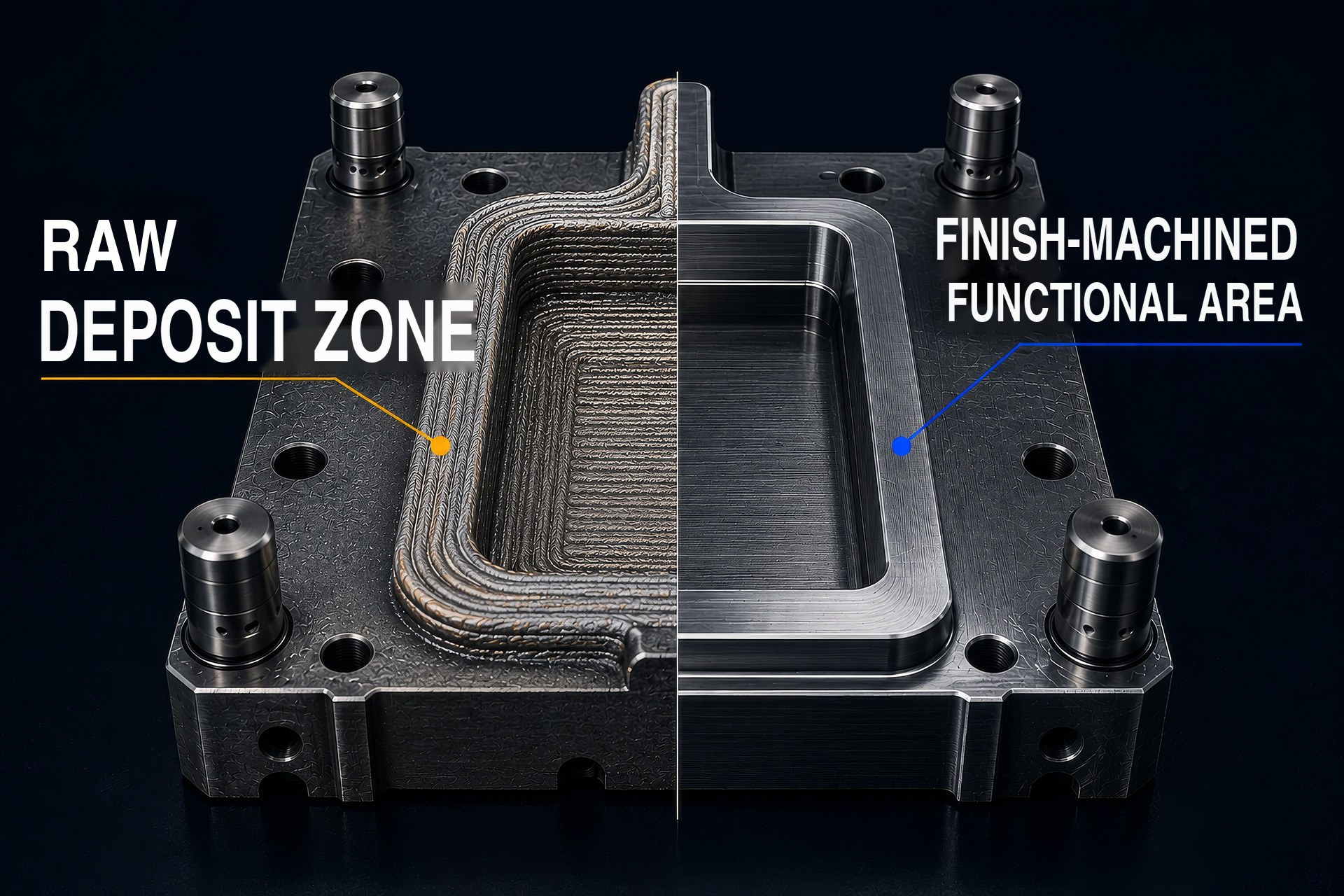
Tools do not always have to be made completely new.
Tools, moulds, and fixtures can be repaired, adapted, or functionally extended by local material deposition.
- Wear edges
- Mould inserts
- Forming tools
- Clamping fixtures
- Gripper and holding areas
- Local functional surfaces
When availability matters more than series logic.
For rare, old, or hard-to-obtain metal parts, wire-based DED can become interesting when conventional procurement, casting tooling, or minimum order quantities do not fit.
- Individual spare parts
- Discontinued components
- Long lead times
- Expensive blanks
- Local reconstruction instead of complete new manufacture
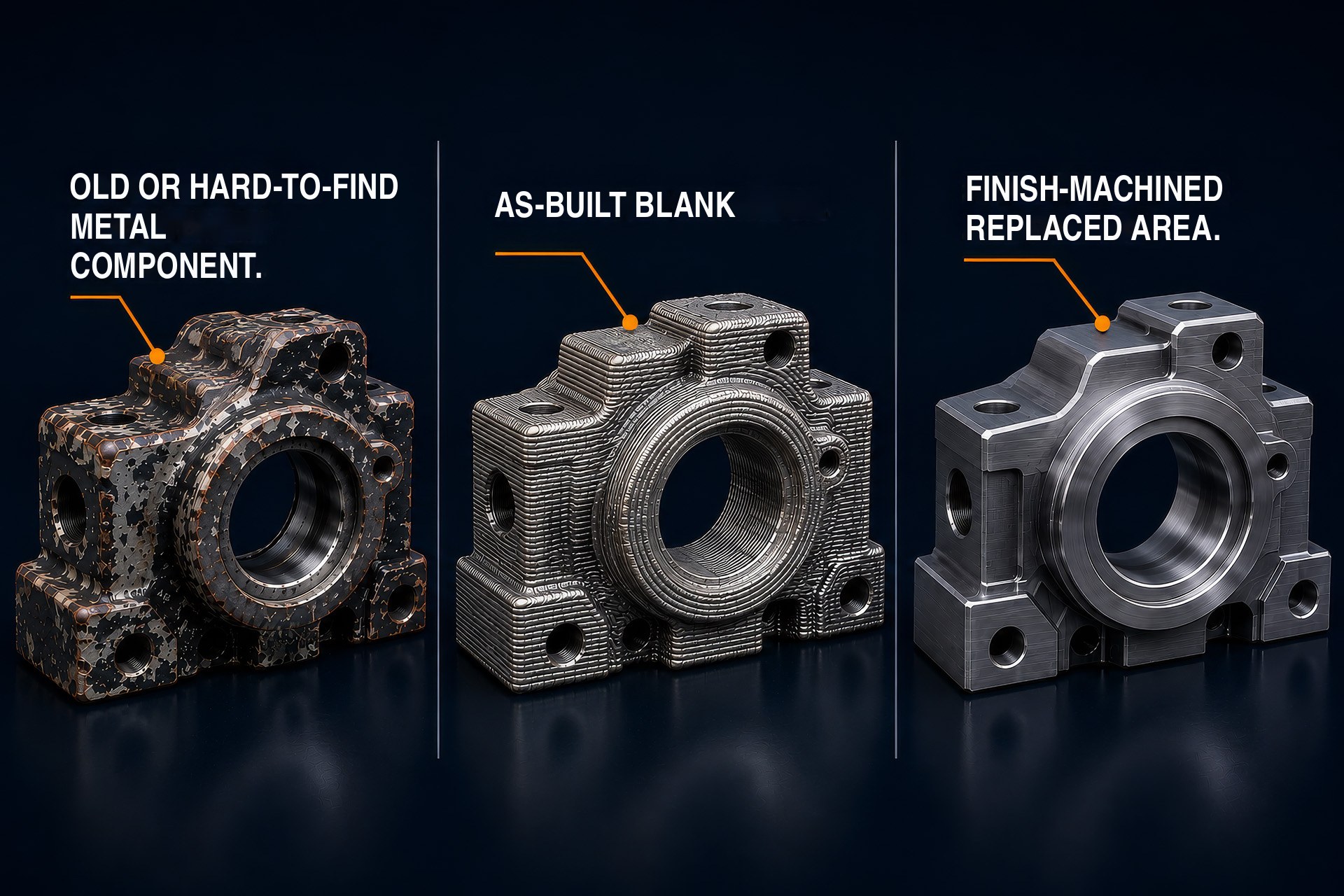
A part does not have to be the same everywhere.
Wire-based DED can selectively create regions that take on other properties or functions: more wear-resistant, more massive, more repairable, or better suited for connection.
- Wear-resistant zones
- Hard edges
- Local material changes
- Sealing and contact areas
- Additional connection geometries
- Functional surfaces on base bodies
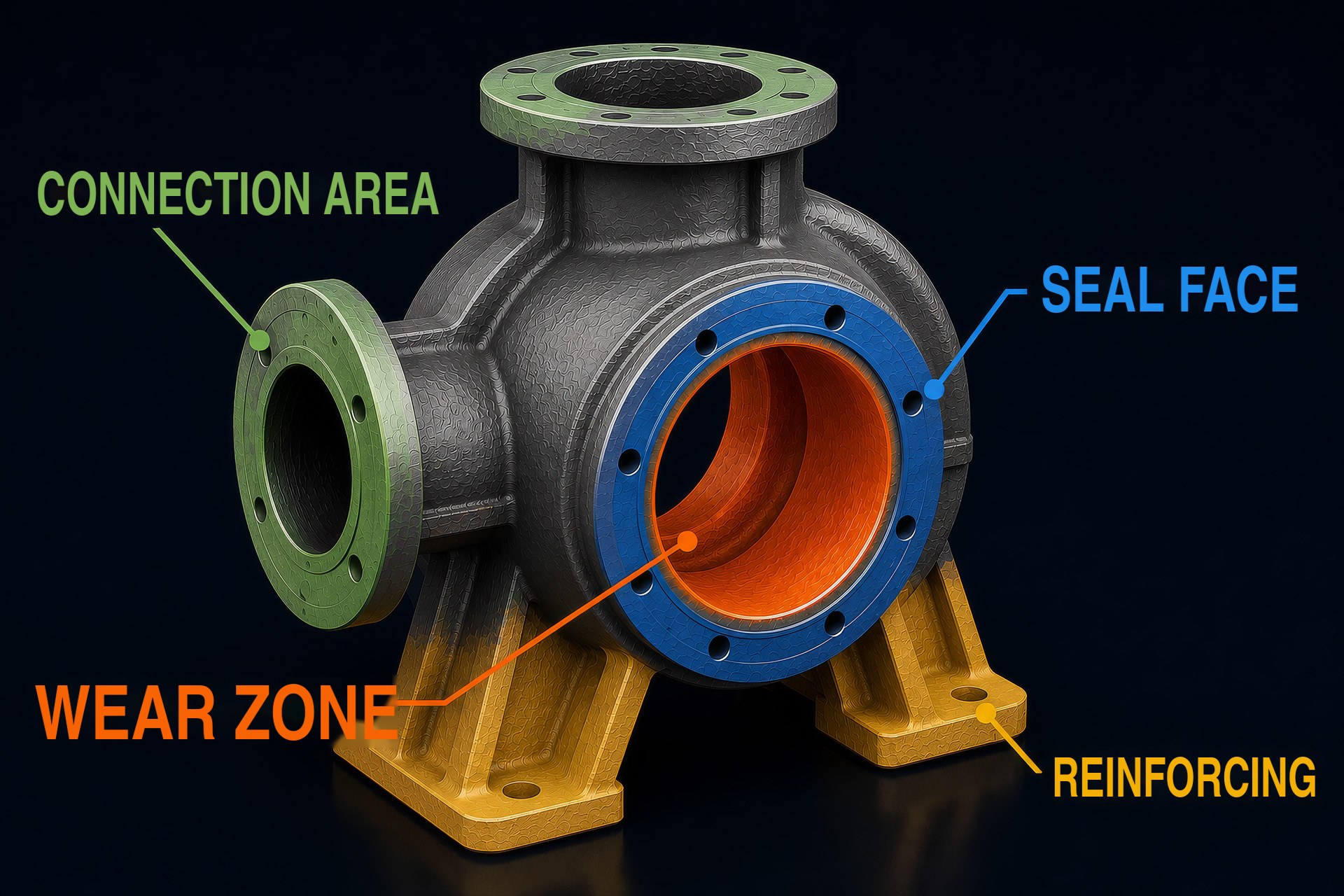
Some assemblies are complex only because they are manufactured conventionally.
Wire-based DED can help build individual regions instead of welding together many sheets, ribs, tabs, or reinforcements separately.
- Fewer individual parts
- Fewer welds
- Less fixture effort
- Integrated reinforcements
- Simplified assembly
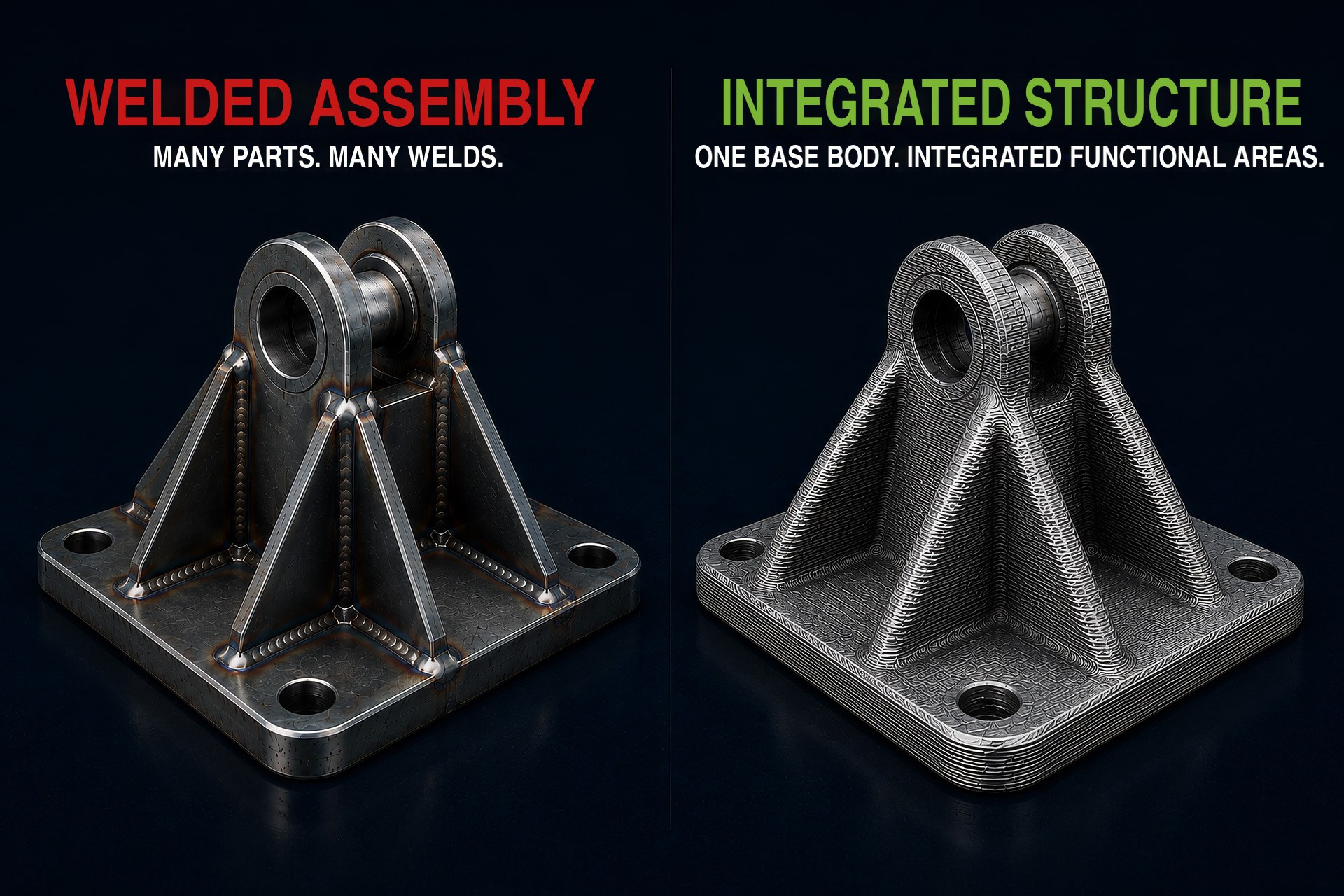
The best application starts with the right question.
Not:
“Can this be printed?”
Rather:
“Where does local metal deposition create a technical or economic advantage?”