
Hybrid manufacturing: material deposition where it creates value.
Wire-based DED does not have to produce the entire part. It is often stronger when it complements existing manufacturing.
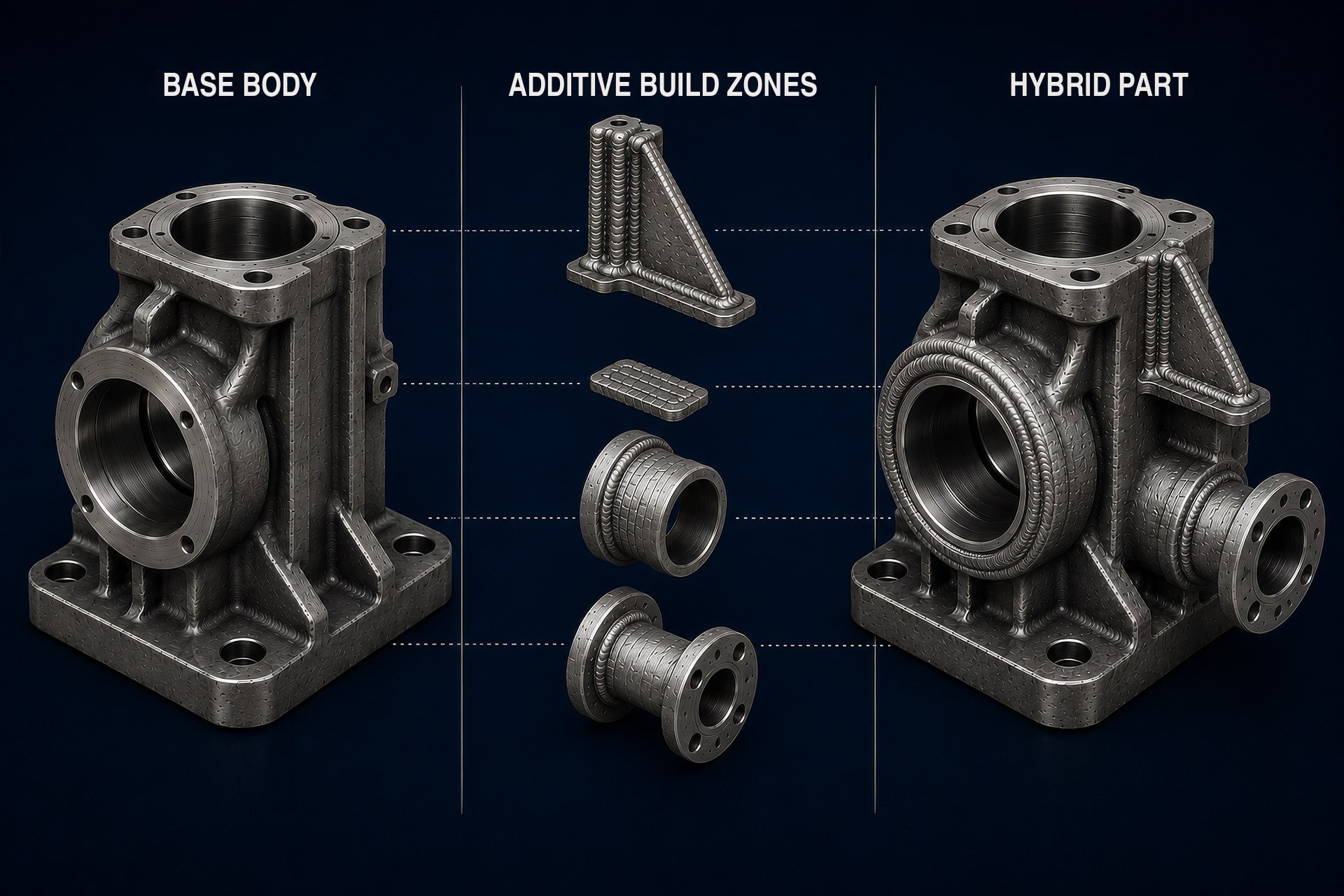
A base body is produced conventionally or already exists. Wire-based DED adds material selectively: for repair, reinforcement, functional zones, or local geometry changes.
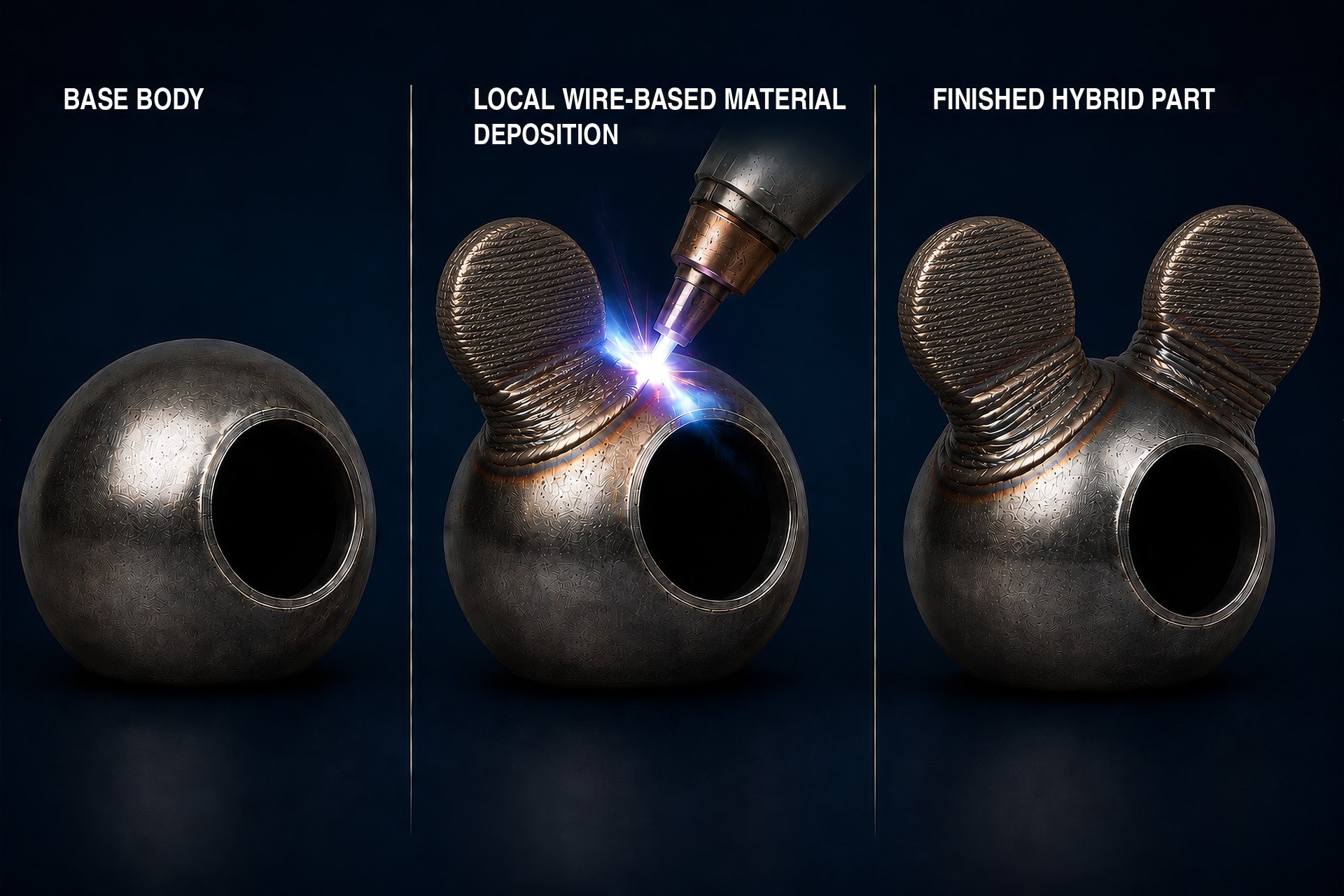
The part does not start from zero.
The starting point can be a milled part, casting, forging, weldment, or damaged existing part. The base body provides shape, stability, and interface geometry. The additive deposit selectively adds the regions that would be complex, expensive, or difficult to source conventionally.
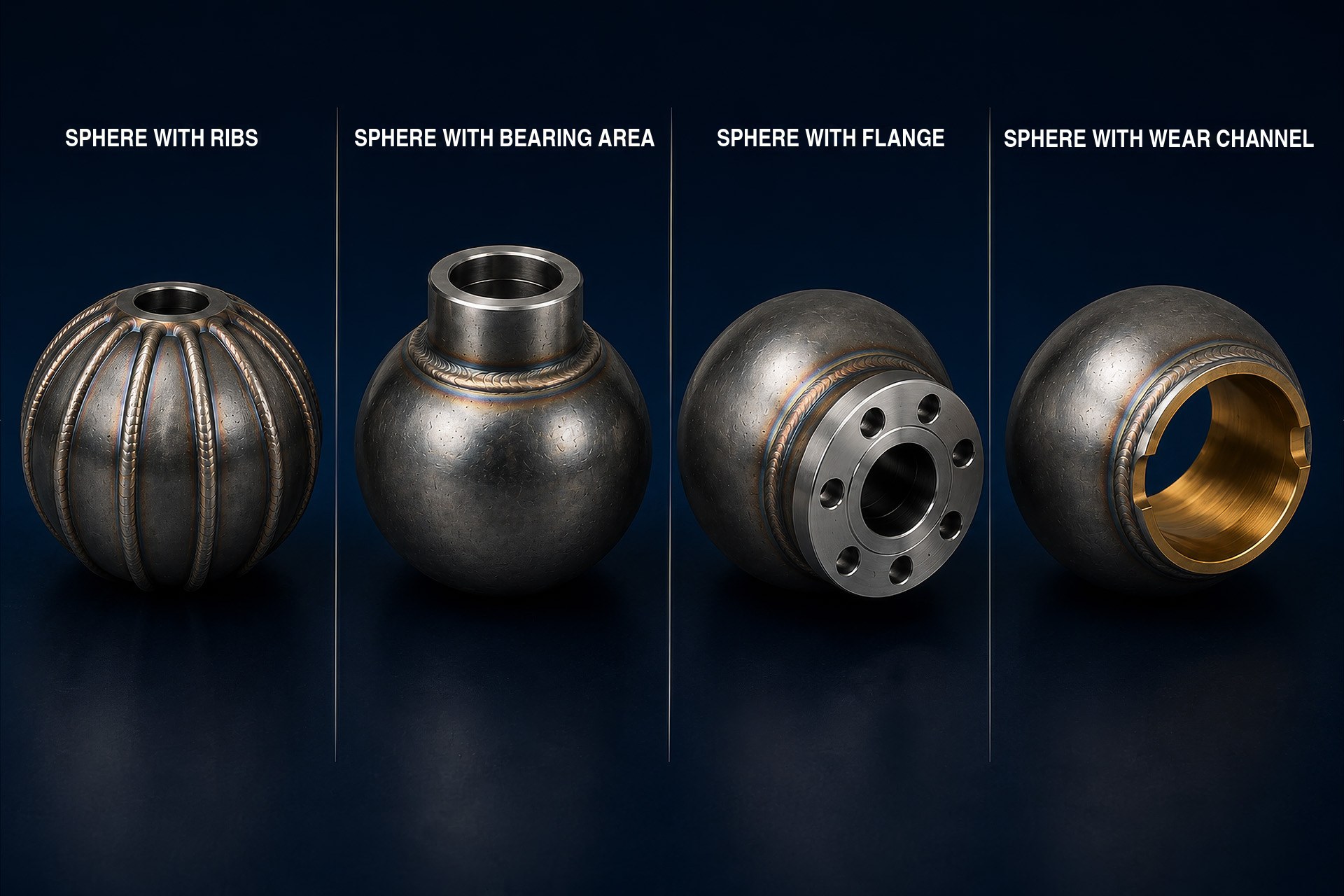
Volume is not what matters. The right zone is.
Hybrid manufacturing becomes interesting when a small region makes a large technical or economic difference: a repaired functional surface, an added reinforcement, a wear-resistant region, or a new interface geometry.
- Reinforcement ribs
- Repair surfaces
- Wear zones
- Bearing areas
- Sealing areas
- Interface geometries
- Local functional volumes
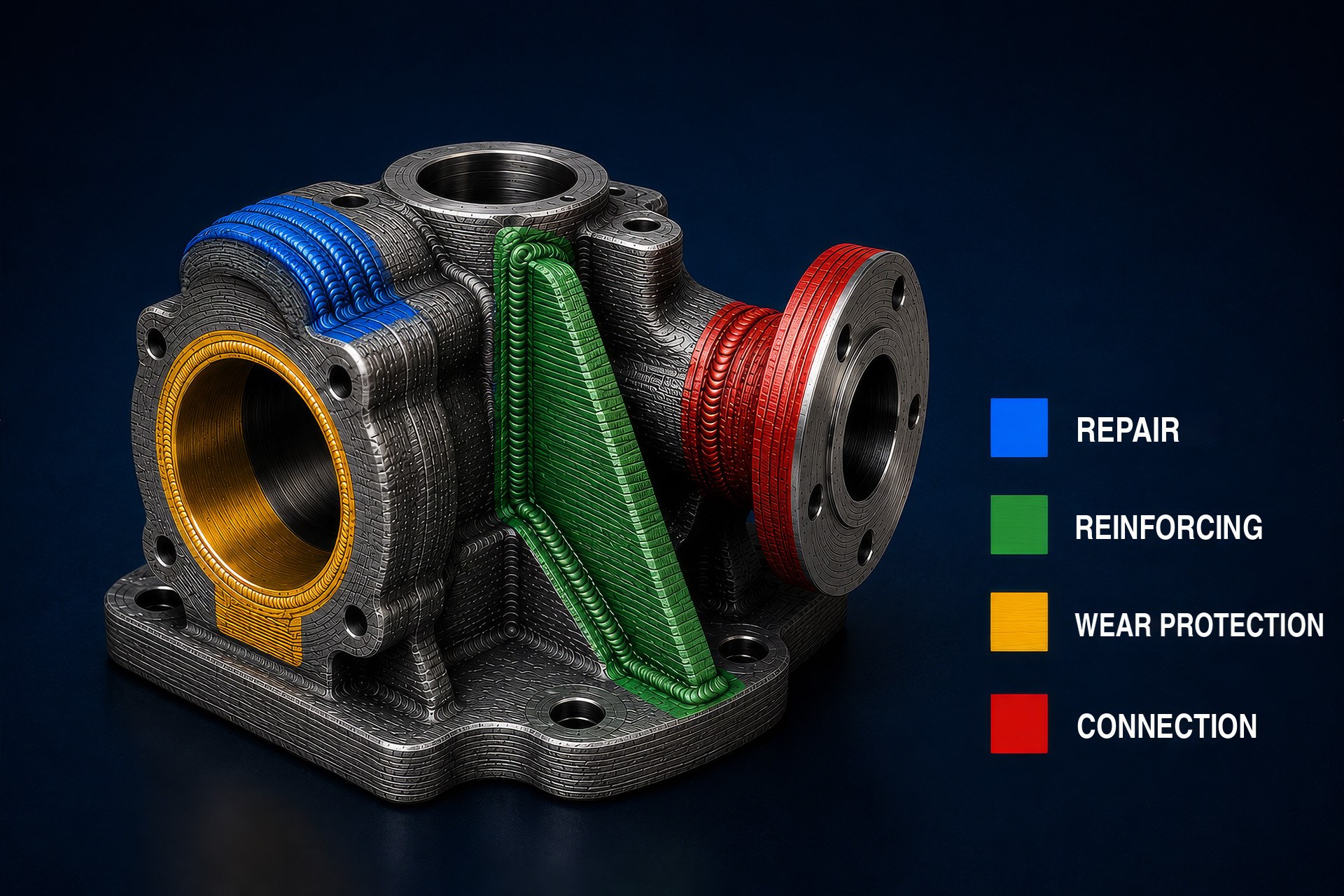
The best additive share is sometimes the smallest.
A complete additive build would often be unnecessary. Hybrid manufacturing uses conventional processes for simple basic shapes and wire-based DED for the regions where local material deposition brings real benefit.
- Less build volume
- Shorter process time
- Targeted use of material
- Repair instead of replacement
- Functional integration without new tooling
- Reduction of complex welded assemblies
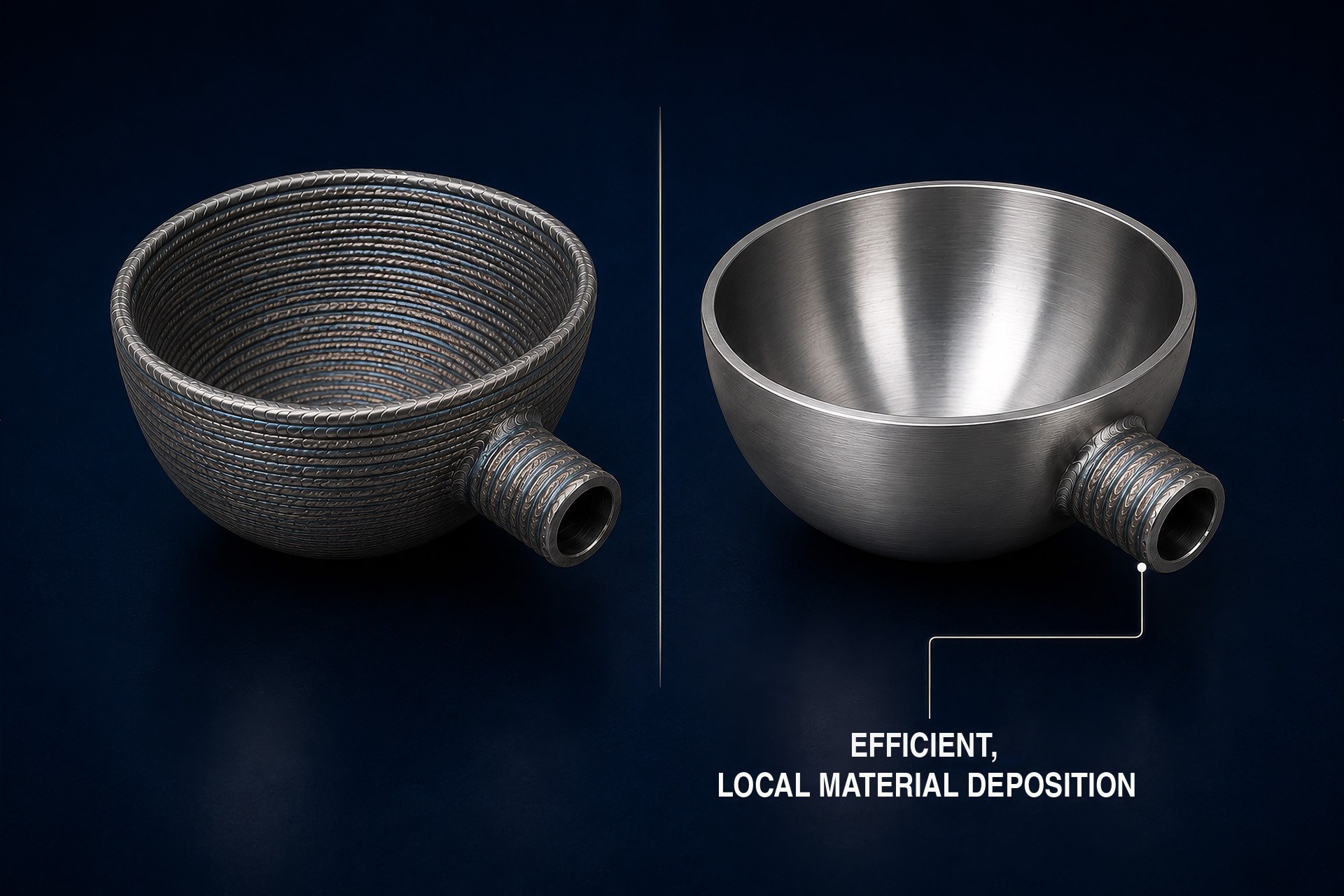
When an existing part has to do more.
Hybrid manufacturing is particularly suitable for parts where an existing basic shape is upgraded by local metallic functions.
- Milled part with built-up reinforcement rib
- Casting with additional functional zone
- Tool with renewed wear edge
- Damaged part with repaired functional surface
- Welded assembly with reduced part count
- Simple blank with local high-performance material

Hybrid manufacturing breaks the part down by manufacturing logic.
The question is not:
“Can this be built entirely additively?”
Rather:
“Which region is produced conventionally, which region is added additively, and where does that create a real advantage?”
Material deposition is only one part of the process chain.
Hybrid manufacturing becomes strong only when build-up, part function, and further machining fit together. That is exactly where the next question begins: Which limits, machining allowances, and post-processing steps must be considered from the start?