
Case examples: from part to manufacturing approach.
Wire-based DED becomes tangible when you look at specific parts: initial problem, conventional solution, additive approach, and open check points.
The examples show not only what is possible. They show what to watch for: geometry, accessibility, build strategy, machining allowance, post-processing, and economic benefit.
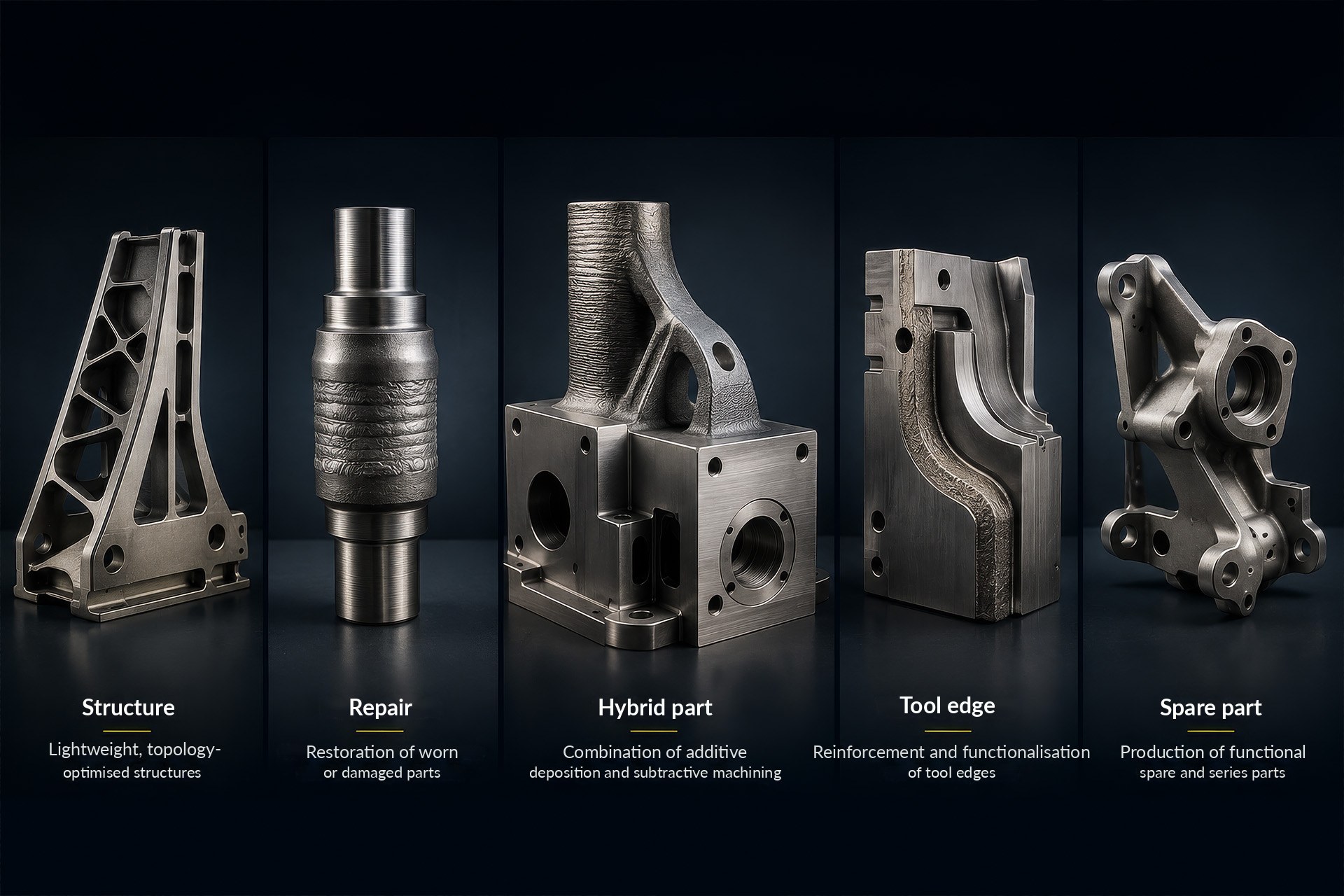
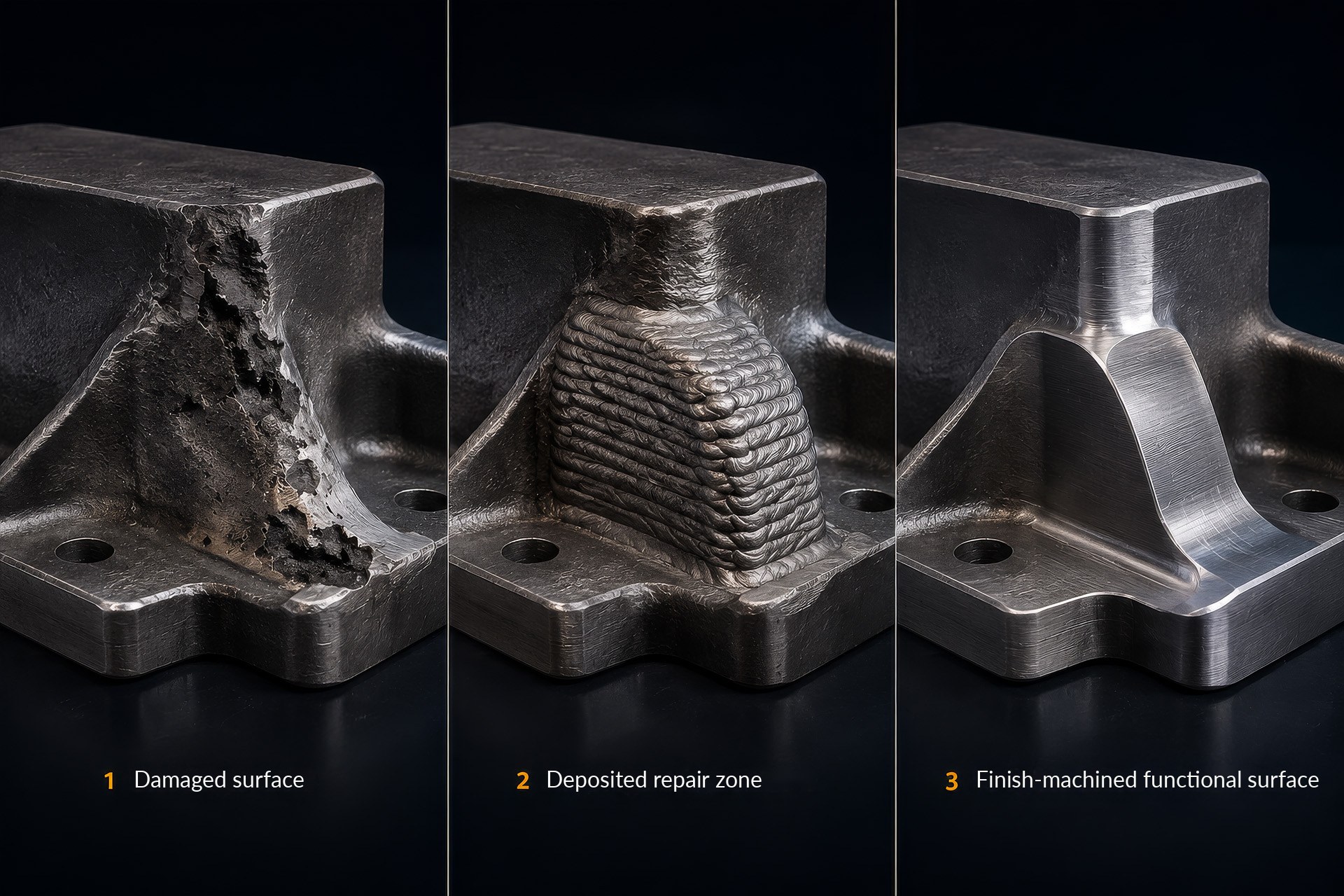
Replace a damaged functional surface instead of the entire part.
Initial situation
An expensive part is fundamentally intact, but a sealing surface, bearing zone, or edge is damaged.
DED approach
Material is deposited locally and then machined to final dimension.
Check points
- Is the damaged area accessible?
- Is sufficient material bonding possible?
- Can the surface be post-processed?
- Will the base body distort due to heat input?
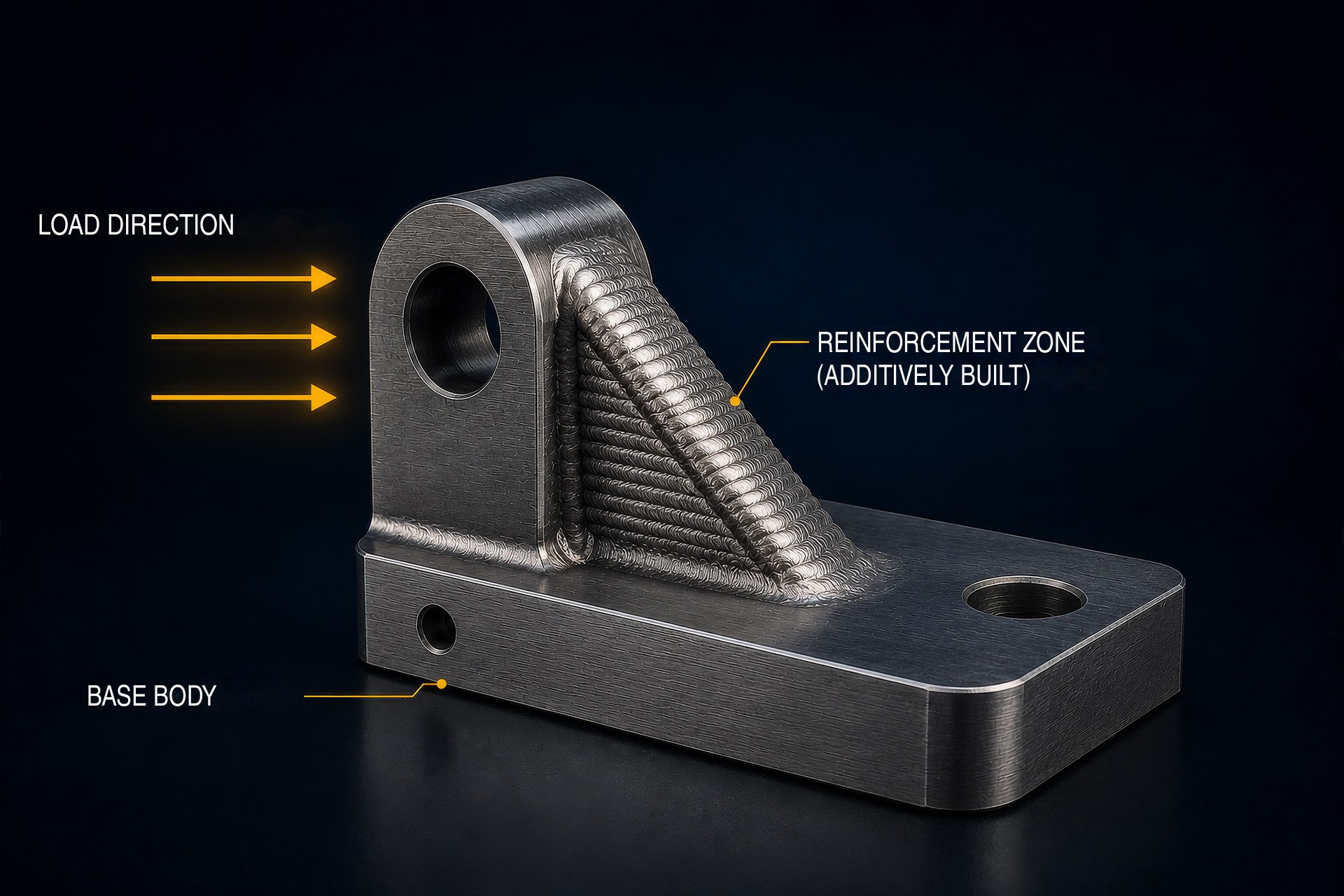
More stiffness without making the entire part more massive.
Initial situation
An existing base body needs more local stiffness or better load introduction.
DED approach
A rib or reinforcement zone is deposited selectively.
Check points
- Is the deposition zone reachable?
- Is the rib large enough for the process?
- Does a critical heat node arise?
- Does the rib have to be machined afterward?
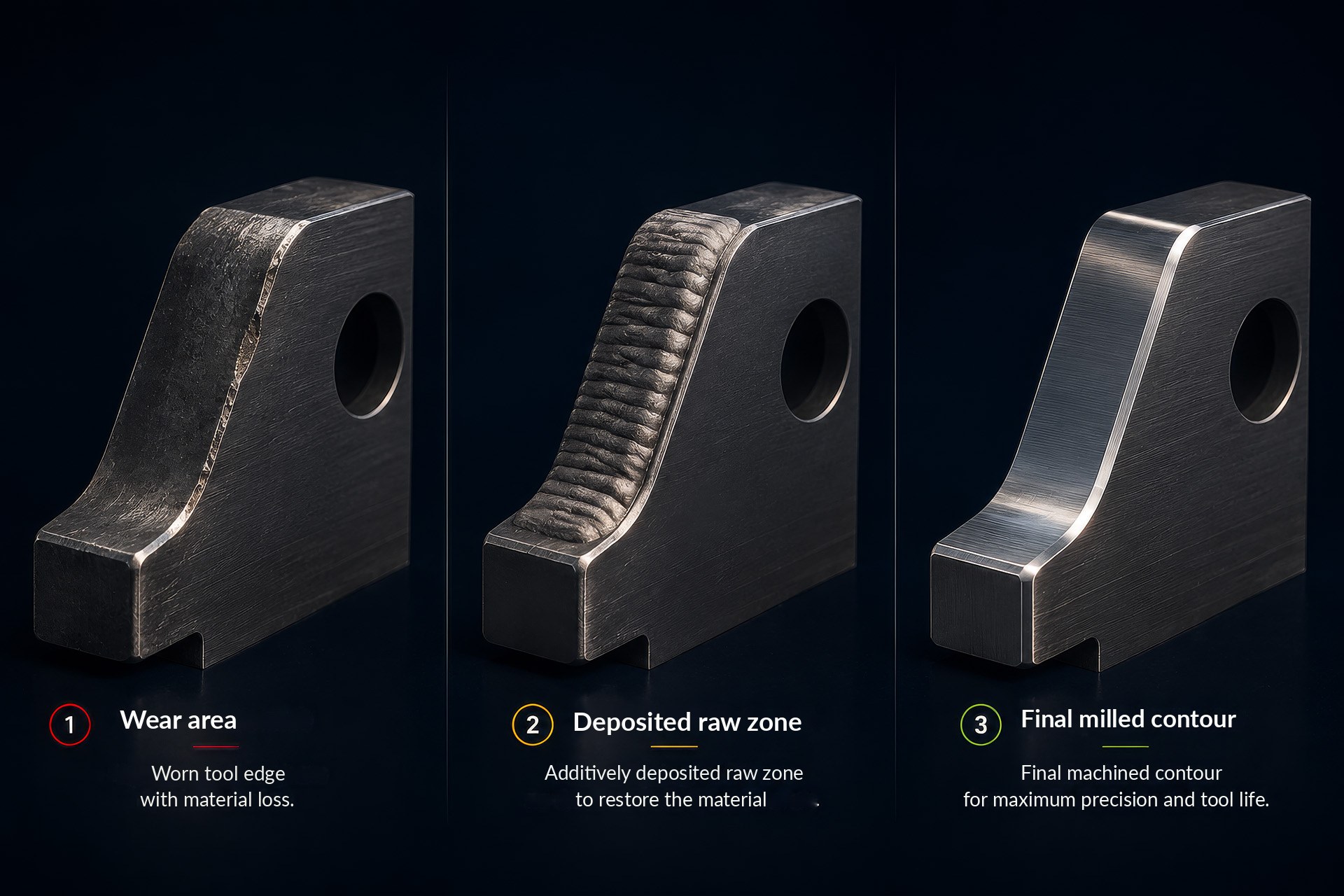
Renew a wear zone instead of replacing the tool.
Initial situation
A tool or mould insert is worn at an edge or contact surface.
DED approach
The wear zone is built up locally, then machined to the target contour.
Check points
- Can the edge be built up in a thermally stable way?
- Does the material match the base structure?
- Is there enough machining allowance?
- Can the final contour be produced reliably?
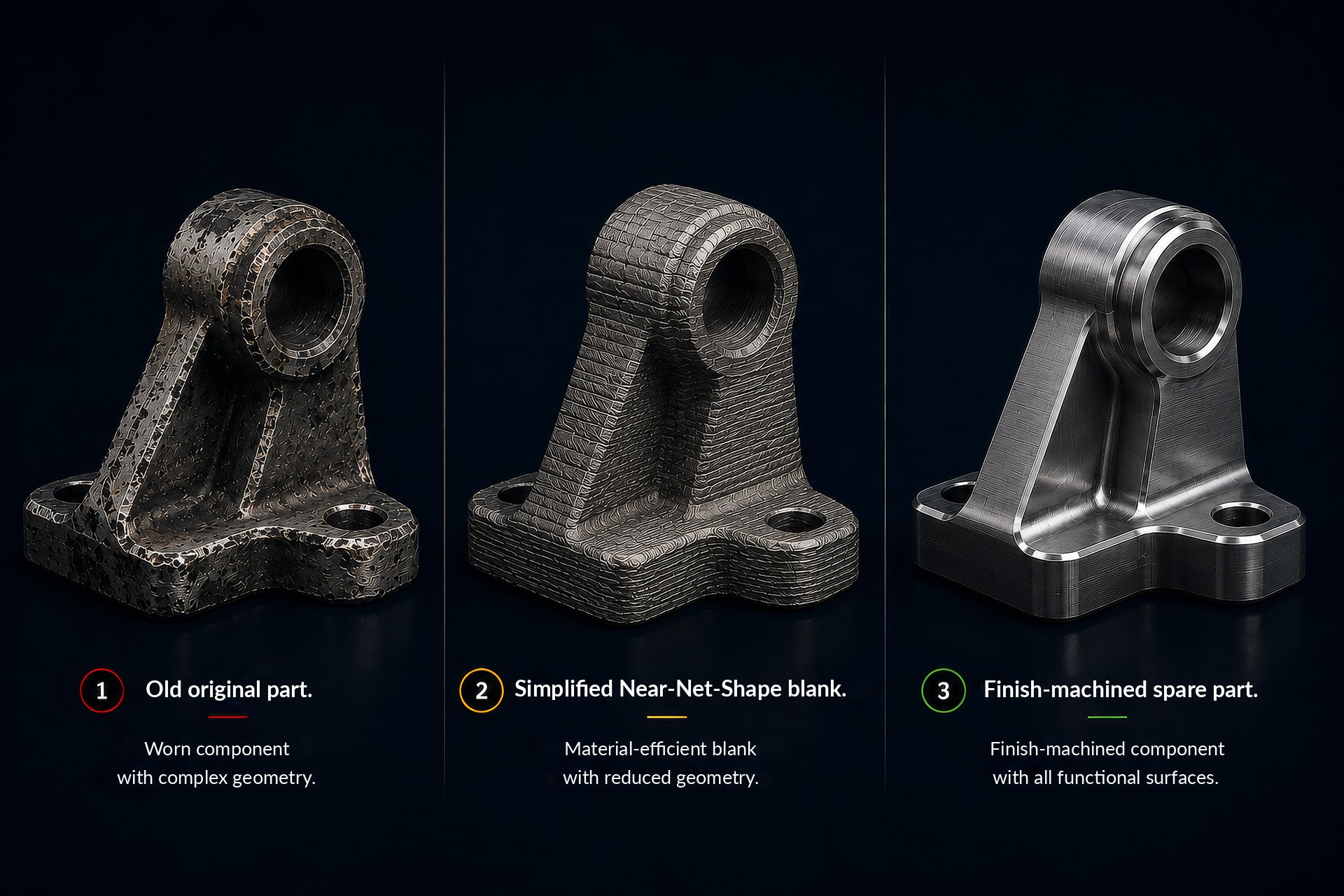
When the original is no longer economically available.
Initial situation
A spare part is discontinued, has a long lead time, or could conventionally be produced only at high cost.
DED approach
A simplified blank is built up additively or in hybrid fashion and then finish-machined.
Check points
- Which regions really have to be built up?
- Which details are better produced by post-processing?
- Are suitable reference and clamping surfaces available?
- Is the material requirement realistic?
Conventional base body. Additive value zone.
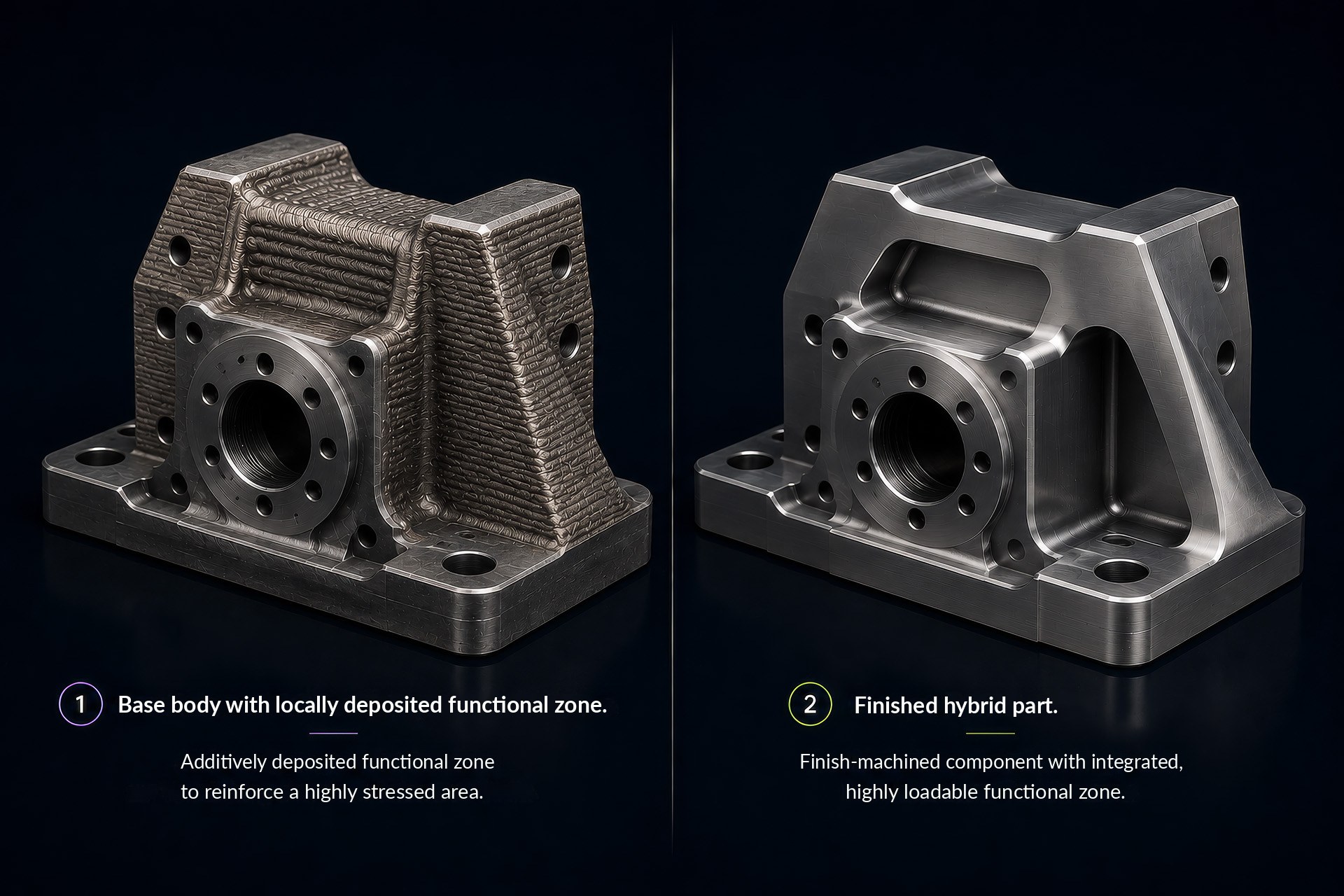
Initial situation
A part has a simple basic shape but a locally complex or highly loaded functional zone.
DED approach
The base body is produced conventionally. Only the value-adding zone is added additively.
Check points
- Is the base body suitable as a carrier?
- Does local material deposition make sense?
- Does the approach reduce welds, raw material, or lead time?
- Is the later machining ensured?
Large volume without a massive raw block.
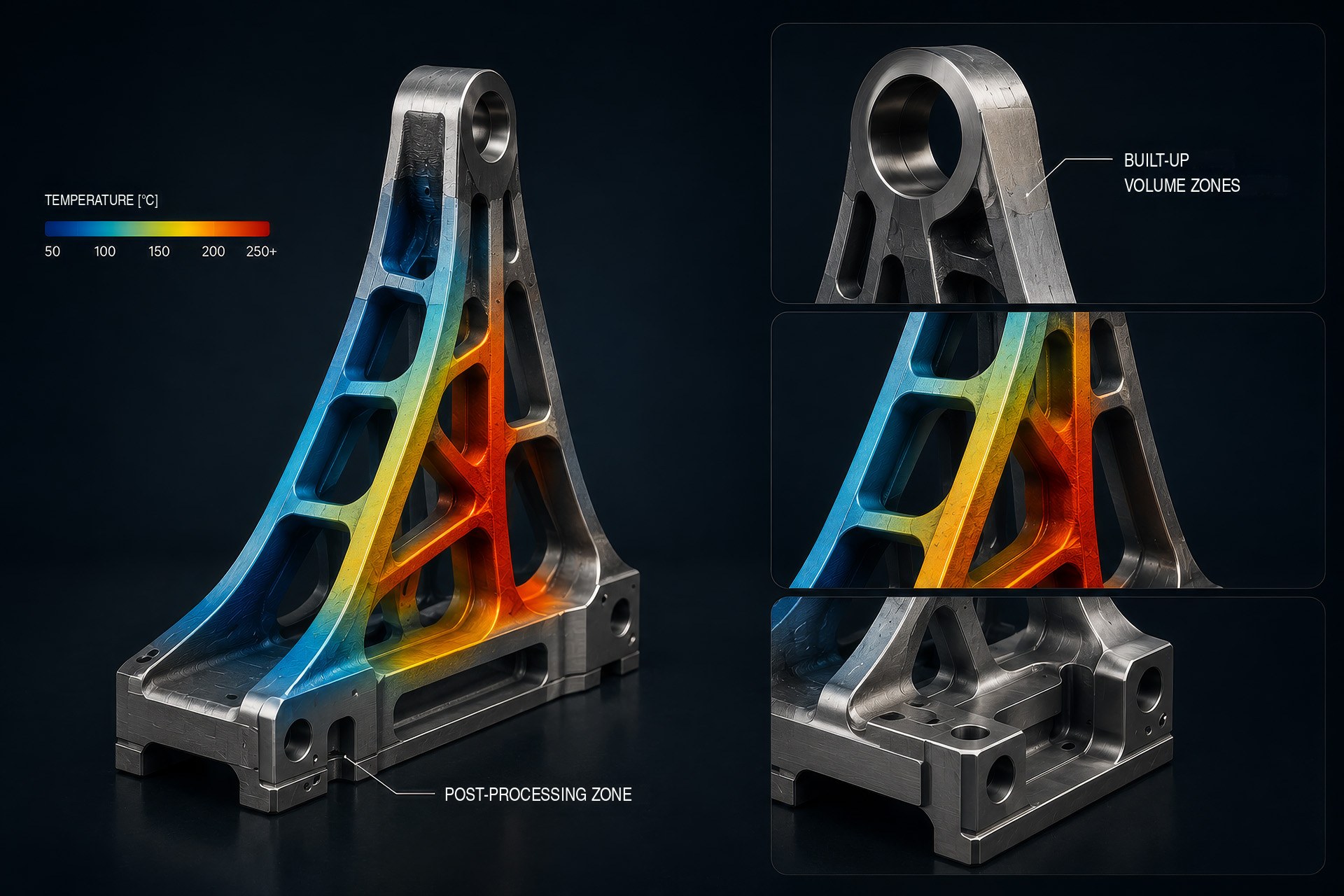
Initial situation
A large structural part would cause a great deal of material loss if machined from solid, or require a long lead time as a casting.
DED approach
A coarse near-net-shape blank or individual structural zones are built up using wire.
Check points
- Is the part size appropriate for the process and machine?
- Can heat input and distortion be controlled?
- Can critical surfaces be post-processed?
- Is material deposition economical compared with casting, milling, or welding?
Good case examples always have the same core.
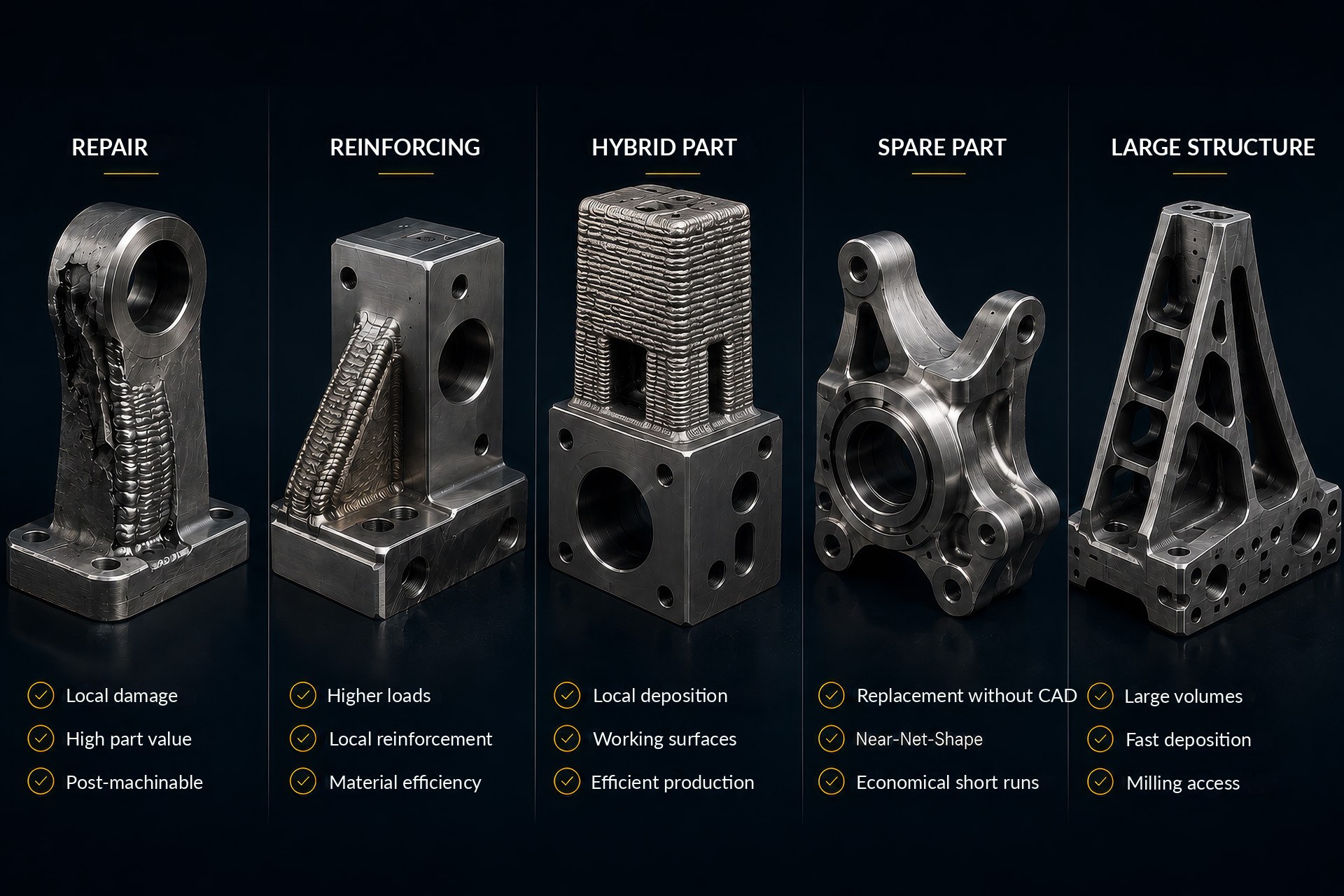
A meaningful use case rarely arises from the question of whether a part is “printable.” What matters is whether local material deposition solves a real manufacturing problem.
- Expensive base part
- Local damage or local added value
- Sufficiently large feature size
- Reachable deposition zone
- Plannable post-processing
- Economic advantage over conventional manufacturing
Does one of these examples match your part?
The case examples show typical entry points. The next step is to look at a specific part: first with provided sample data, then with your own geometry data.